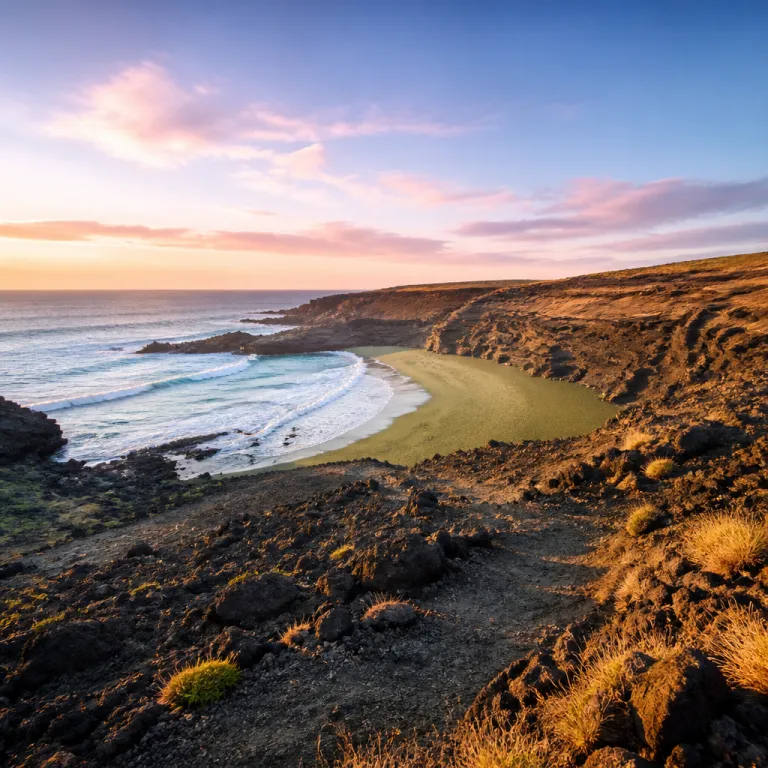
Reading the landscape: what makes Papakolea’s sand green
The green sand at Papakolea Beach is not a trick of light. This remote shoreline sits inside the eroded flank of Puʻu Mahana, a volcanic cinder cone made of ash and glassy fragments that has been slowly releasing crystals of olivine into the Pacific. On the Big Island of Hawaiʻi, where lava shapes almost every place you stand, Papakolea’s muted green is geology you can feel between your toes.
Each wave that hits this pocket of coast grinds the volcanic rock, separating dense green crystals from the darker sand grains. Over time, the lighter ash and black sand wash away more easily, leaving a concentrated band of olive-colored sediment that gives the shoreline its unusual green color. The result is a crescent of beach that looks almost unreal against the deep blue water and the rust colored cliffs of island Hawaiʻi.
Geologists point out that this supply of olivine is finite, because the cinder cone feeding the beach is slowly eroding into the sea. Strong waves and winter swells can carry the green sand away faster than Puʻu Mahana can replenish it, which means Papakolea will not look the same forever. When you stand near this southernmost point of the United States, you are watching a rare coastal landscape change grain by grain with every set of waves.
Understanding the green sand beach Papakolea Big Island hike
The green sand beach Papakolea Big Island hike is not a casual stroll from a resort pool. From the informal trailhead near the South Point parking lot, the route to Papakōlea Green Sand Beach follows the coast for roughly 2.5 miles each way across dry, dusty tracks. That means you should plan for about 5.5 miles round trip, with three to five hours of walking depending on your pace and how long you linger at the water.
The route is more a network of parallel ruts than a single marked path, carved by years of unauthorized vehicles along the rough coastal road that hugs the shoreline. Expect dry dusty conditions, constant wind, and no shade at all as you hike toward the cinder cone that hides the green cove. Underfoot, the terrain shifts between compact dirt, loose sand, and occasional rocky patches, so sturdy shoes matter more than style on this part of island Hawaiʻi.
Because there are no facilities, no potable water, and no restrooms along the way, you need to treat this as a real coastal hiking outing rather than a quick photo stop. Start early in the morning, carry more water than you think you need, and wear sun protection that can handle hours of reflected light from the sand and waves. For solo travelers staying at luxury properties on the Big Island, this is the kind of excursion that rewards preparation and a realistic assessment of your fitness before you leave the parking area.
Essential checklist for the Papakolea hike: begin early to avoid midday heat; bring at least two liters of water per person; wear reef safe sunscreen, a wide brimmed hat, and sunglasses; choose closed toe footwear with good grip; pack light snacks and a small first aid kit; remember there are no amenities at the beach or along the South Point trail.
Planning your South Point day around seasonal food stops and coastal drives can turn the long hike into a richer island experience.
Access, ethics, and how Papakolea fits a South Point day
Reaching Papakolea Beach starts with the long drive down South Point Road, a narrow ribbon that leaves Highway 11 near Nāʻālehu and heads toward the southernmost point of the United States. The road ends at a rough parking lot on windswept pastureland, where you will usually find local fishermen, a few food trucks, and sometimes drivers offering rides along the coast. This is where the ethics of the green sand beach Papakolea Big Island hike become impossible to ignore.
Although it can be tempting to skip the walking and pay for a shuttle, vehicles are prohibited on the coastal trail because repeated driving has carved deep ruts into the fragile landscape. The most responsible way to experience this shoreline is on foot, staying on existing paths and resisting the urge to create new tracks across the dry dusty ground. Local visitor management plans highlight Ka Lae and South Point as sensitive areas, and walking the trail is one of the simplest ways to respect both the land and the community that lives around this point.
Many travelers pair the Papakolea green sand cove with a stop at the cliff jumping area near South Point, where clear water crashes against the lava ledges below. If you choose to swim or jump here, understand that waves and currents can be strong, and there are no lifeguards at this remote place on island Hawaiʻi. Before or after your hike, you can also explore other volcanic landscapes by planning time at Hawaiʻi Volcanoes National Park and using guidance such as the current strategies for navigating the park without the Kīlauea Visitor Center.
Who should hike to Papakolea from a luxury base — and who should skip it
From a luxury hotel on the Kohala Coast or in Kona, the green sand beach Papakolea Big Island hike is a full day commitment, not a quick detour between spa appointments. You will spend several hours in the car just reaching South Point Road, then another three to five hours on the trail and at the shoreline itself. For some travelers, that trade off is exactly why Papakolea becomes the most memorable place of their island Hawaiʻi stay.
If you enjoy hiking, do not mind wind, and are comfortable walking 5.5 miles on uneven terrain, the payoff is strong. Standing at the rim of the cinder cone and looking down at the green sand cove, with waves folding into the bay and the open Pacific stretching toward Antarctica, feels elemental in a way that resort beaches rarely match. Strong swimmers sometimes enter the water here, but swimming is often unsafe due to rough ocean conditions, steep shore break, and the lack of lifeguards.
On the other hand, if you dislike heat, have knee or ankle issues, or are traveling with very young children, this outing may feel more punishing than rewarding. In that case, you might be better served by staying closer to your hotel and exploring curated coastal experiences such as the Big Island’s most impressive resort pools and ocean fed lagoons. The island offers many other beaches with easier access, so you can still enjoy sand, water, and waves without committing to the full Papakolea green adventure.
How to plan Papakolea from a high end Big Island hotel
Thoughtful planning turns the green sand beach Papakolea Big Island hike from a box to tick into a highlight of your trip. Start by choosing a hotel location that makes the drive to South Point manageable, whether that is a coastal resort near Kona or a quieter property closer to Nāʻālehu on the southern side of island Hawaiʻi. From most Big Island luxury bases, you will want to leave before sunrise to reach the parking lot early and walk the trail in cooler air.
Pack as if you were heading into a remote backcountry area, even though you are technically never far from the point road and the sea. That means at least two liters of water per person, a hat that will not blow off in the wind, reef safe sunscreen, and closed toe shoes that can handle dry dusty tracks and patches of loose green sand. Some travelers also bring a light towel, a change of clothes, and a small first aid kit, because the combination of wind, waves, and coarse sand can leave skin more scraped than expected.
Once you arrive at the parking area, secure valuables out of sight, note your exact position relative to the trailhead, and check the sky for signs of incoming weather. The hike to Papakōlea Beach is considered moderate, about 5.5 miles round trip with no shade, and that single fact should guide your decision about whether to start, especially if you are already tired from earlier travel or late nights enjoying resort amenities.
Safety, respect, and what luxury means at the southernmost point
Luxury on the Big Island is often defined by thread counts and pool design, but at Papakolea Beach it looks more like time, space, and respect. When you commit to the green sand beach Papakolea Big Island hike, you are choosing an experience where there are no cabanas, no cocktails, and no staff to smooth the edges of the day. What you gain instead is the rare feeling of standing near the southernmost point of the country, with only wind, waves, and the muted green color of olivine for company.
Respect here starts with your feet, by walking the trail instead of hiring unauthorized vehicles that deepen ruts and scar the coastline. It continues with how you treat the beach itself, resisting the urge to pocket green sand as a souvenir and leaving the cinder cone walls untouched so future travelers can read the same volcanic story in the rock. Driving to the Green Sand Beach along the coastal trail is not allowed, and vehicles are prohibited on this section of shoreline.
Safety is the final layer, and it is non negotiable in a place where the nearest lifeguard is many miles away. Ocean conditions can change quickly, and swimming at Papakōlea Beach is often unsafe because of rough waves, strong currents, and steep shore break. If you keep those realities in mind, carry enough water, and give the landscape the same respect you expect from a five star property, the hike to Papakolea can sit comfortably alongside your most polished island Hawaiʻi moments.
FAQ
How long does the hike to Papakolea green sand beach take?
The hike to Papakolea green sand beach is roughly 5.5 miles round trip from the informal parking lot at South Point. Most visitors take between three and five hours, including time on the sand and the steep path down into the cove. The route is exposed, with no shade and consistent wind, so pace yourself and carry enough water.
Is the Papakolea trail suitable for children or less experienced hikers?
The Papakolea trail is considered moderate because of its length, dry dusty terrain, and lack of shade rather than technical difficulty. Older children who are used to hiking and can comfortably walk 8 to 9 kilometers may handle the route, but very young kids often struggle with the wind and heat. Less experienced hikers should start early, turn back if they feel fatigued, and remember that the return from the beach is slightly uphill.
What should I bring for the green sand beach Papakolea Big Island hike?
Plan for strong sun, wind, and no facilities by packing at least two liters of water per person, a wide brimmed hat, sunglasses, and high SPF reef safe sunscreen. Closed toe shoes with good grip are important because the trail mixes compact dirt, loose sand, and occasional rocky sections near the cinder cone. A light towel, snacks, and a small first aid kit round out a sensible packing list for this remote outing.
Can I swim safely at Papakolea beach?
Swimming at Papakolea Beach is often risky because the waves can be powerful and the shore break steep, with no lifeguards on duty. Conditions vary by day and season, but strong currents and sudden sets are common at this exposed point on island Hawaiʻi. Many visitors choose to enjoy the green sand and the view from the shore, entering the water only to wade carefully when the ocean is calm.
Are there any services or amenities near the South Point parking area?
Near the South Point parking area you may find informal food trucks, local vendors, and restrooms, but there are no services along the trail itself or at the beach. Do not rely on being able to buy water or gear once you leave your hotel or main town, because availability can change without notice. Treat Papakolea and South Point as a remote excursion, stocking up on supplies before you drive down South Point Road.