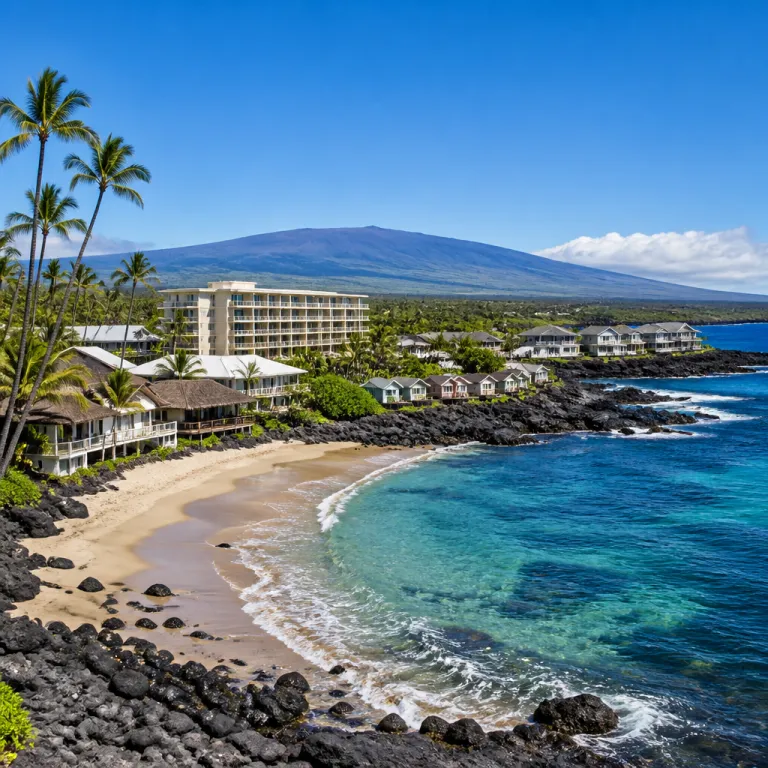
Kohala Coast luxury: where accommodation Hawaii Big Island reaches its peak
For travelers seeking the most refined accommodation Hawaii Big Island can offer, the Kohala Coast is the island’s luxury corridor. This stretch of lava-framed shoreline concentrates the highest guest rating scores, the most polished service, and the clearest sense that your stay is shaped by the meeting of ocean, desert, and dormant volcano. Nightly rates are high (often 650 to 1,200 USD in winter for major resorts), yet the combination of beach access, golf, and cultural depth makes these properties the best choice for couples who want a single base and minimal driving.
Mauna Kea Beach Hotel anchors this coast, a true luxury resort that sits above the crescent of Kaunaʻoa (Mauna Kea) Beach and its smaller twin bay, with a view that still defines high-end accommodation on Hawaii Island. The renovated rooms, discreet fitness center, and calm, adult-leaning pool scene suit guests booking special occasions, while free parking for certain categories and a well-run business center make it workable for remote work weeks. A short drive south (about 10 minutes), the Westin Hapuna Beach Resort offers a slightly more contemporary feel, with terraced rooms that frame the big Pacific and a resort layout that gives almost every stay a direct beach connection.
Further along the Kohala Coast, Mauna Lani and its surrounding vacation rentals create a quieter, residential-style resort zone that still delivers full-service hotel comforts. These townhome and villa-style rentals are ideal when you want the space of a residence but the amenities of nearby hotels big and small, including restaurants, a spa, and a staffed fitness center. Inland, Waikoloa Village and the larger Waikoloa resort complex offer more accessible price points (often in the 350 to 600 USD range outside peak holidays), with large-scale properties that appeal to popular guests who prioritize pools, family-friendly beaches, and easy access to activities over ultra-secluded luxury.
Kailua Kona and the west coast: sunsets, coffee country, and flexible stays
When you picture accommodation Hawaii Big Island with golden sunsets and a walkable waterfront, you are probably imagining Kailua Kona. This harbor town is the practical heart of the west side, with mid-range hotel options, oceanfront condos, and smaller properties that give you a good balance between price and atmosphere. It is also the best base if you want to mix beach days with coffee farm visits, manta ray night dives, and evenings spent in lively bars rather than at a secluded resort.
In central Kailua Kona, older oceanfront hotels line Aliʻi Drive, offering compact rooms, a pool, and a front-row seat to the bay, while newer properties inland add reliable chains with good reviews and predictable service. The upcoming Hampton Inn by Hilton in Kailua Kona signals how demand for mid-range hotels is growing, especially among guests booking longer stays who want free parking, a small business center, and easy highway access for day trips. For couples, a well-rated oceanfront hotel on the water can be a smart compromise, giving you a romantic view without the full resort price tag of the Kohala Coast.
South of town, smaller hotels and vacation rentals hug the lava coastline, where waves crash against black rock rather than a sandy beach. This is where accommodation on Hawaii Island feels more residential, with many guests booking condos that include kitchens, laundry, and free access to small pools, which can be ideal if you are planning a split stay between Kona and Hilo. If you are timing a visit for peak season, reading about booking the Big Island in July and why the second week is the sweet spot can help you check availability at your preferred hotel before prices spike and reviews start mentioning crowding at popular beaches; as a rule of thumb, aim to reserve west-side stays three to six months ahead for winter holidays.
Waikoloa and family friendly resorts: value, lagoons, and easy logistics
For many travelers researching accommodation Hawaii Big Island, Waikoloa is where the numbers and the amenities align. The area around Waikoloa Beach and Waikoloa Village offers large-scale resort hotels, condo complexes, and timeshare-style properties that sit between ultra-luxury and bare bones, making them a good choice for families or couples who want resort energy without Kohala price levels. You trade a little intimacy for convenience, but you gain pools, restaurants, and activities that keep everyone occupied without much planning.
The Hilton and Marriott resorts in Waikoloa are classic examples of hotels big enough to feel like self-contained villages, with multiple pools, on-site dining, and lagoon-style beach access that suits cautious swimmers. These properties often include a business center, a well-equipped fitness center, and a range of room categories from standard to near-suite hotel rooms, which helps guests booking with different budgets share the same resort. Many rooms advertise a partial ocean view rather than full beachfront, so reading recent reviews carefully and checking the guest rating can help you decide whether the upgrade cost is justified; also note that self-parking and resort fees can add 50 to 80 USD per night to the advertised rate.
Just north, the Fairways at Mauna Lani rentals for refined beachfront escapes on the Big Island offer a different take on accommodation on Hawaii Island, pairing townhouse-style layouts with access to resort beaches and golf. Couples who want more privacy than a traditional hotel stay can enjoy full kitchens, separate bedrooms, and free parking, while still being a short drive from the Mauna Kea and Hapuna Beach corridor. If you are interested in the cultural side of the Kohala Coast, staying in this area also puts you close to the Puakō petroglyph fields, and a detailed guide to the petroglyphs at Puakō and their 3,000 carvings just ten minutes from your resort can help you plan a morning walk that connects your beach holiday to the island’s deeper history.
Hilo and the east side: rain, waterfalls, and character stays
On the windward side, accommodation Hawaii Big Island takes on a different mood in Hilo, where rain nourishes gardens and waterfalls instead of manicured resort lawns. Prices here are often 50 to 70 percent lower than on the Kohala Coast, which means your budget stretches further, especially for longer stays. You will not find sprawling resort complexes, but you will find character-rich hotels, restored plantation houses, and small inns that put you close to markets, museums, and the island’s most dramatic waterfalls.
Hilo’s waterfront hotels cluster near the bay, offering simple rooms with a view of the water and Mauna Kea rising behind town when the clouds lift. These hotels big and small tend to focus on practical comforts such as free parking, a basic fitness center, and a modest business center rather than on luxury-hotel theatrics, yet many earn good reviews for warm service and local knowledge. For couples, a stay in Hilo can be the best way to experience the island’s everyday life, from the farmers market to the banyan-lined Liliʻuokalani Gardens, while still having easy access to the highway that leads to Volcano and the national park in about 45 minutes.
Inland from Hilo, small lodges and cottages sit among the slopes that rise toward Mauna Kea, where cooler nights and coqui frog choruses replace the sound of surf. This side of Hawaii Island is ideal for guests booking a split itinerary, spending a few nights in Kona or on the Kohala Coast before moving east to explore waterfalls, botanical gardens, and lava tubes. As one trusted guide notes, “Are vacation rentals better than hotels on the Big Island? Vacation rentals offer more space and amenities; hotels provide full service.”, and Hilo is where that choice becomes most visible, with many travelers opting for home-style stays that feel rooted in the community and often include kitchenettes or shared lanais.
Waimea and Volcano Village: cool uplands and lava edge retreats
Between coasts, accommodation Hawaii Big Island shifts again in Waimea, the ranch town that sits at about 820 meters above sea level. Days are often sunny and clear, while evenings can be cool enough for a light sweater, which makes this a refreshing contrast to the humid shoreline. From here, you can reach both the Kohala Coast and the Hilo side in under an hour, making Waimea a strategic base for travelers who want to sample multiple regions without changing hotels too often.
Waimea’s inns and small hotels lean into a country aesthetic, with wood beams, fireplaces, and gardens that frame a view of the surrounding hills rather than the beach. These properties rarely market themselves as luxury-hotel experiences, yet many deliver quietly polished service, good breakfasts, and thoughtful touches that earn consistently good reviews from popular guests. For couples, a stay here can feel like a retreat within a retreat, especially if you spend your days on the Kohala Coast and return to cooler air, fewer crowds, and restaurants that showcase local beef and farm produce; typical nightly rates for Waimea’s better-reviewed lodgings often fall between 250 and 450 USD depending on season.
Further south, Volcano Village offers some of the most atmospheric accommodation on Hawaii Island, set among tree ferns and ohia forest near the entrance to Hawaiʻi Volcanoes National Park. Here, cottages and small lodges with wood stoves and rain on the roof replace the classic beach resort, and the focus shifts from ocean view to proximity to the volcano and its trails. Many guests booking this area plan to enter the national park at dawn or after dark, so choosing a stay with easy access to the park entrance and free parking can make those early starts and late returns far more comfortable; plan on 5 to 15 minutes’ drive from most Volcano Village properties to the main gate.
How to choose your region: matching your stay to your Big Island plans
Choosing accommodation Hawaii Big Island begins with a simple question: what do you want to do most days? If your dream is to wake to a calm beach, walk to the water, and return to a resort that anticipates your needs, then the Kohala Coast and its luxury hotel properties such as Mauna Kea and Westin Hapuna will suit you best. If you prefer a more flexible stay with a mix of town life, day trips, and restaurant hopping, then Kailua Kona and the wider Kona coast will give you more variety.
Travelers who prioritize value and family-friendly amenities often find Waikoloa and Waikoloa Village to be the right compromise, with hotels big enough to offer multiple pools, kids’ programs, and on-site dining. Those who want culture, markets, and a lived-in island feel gravitate toward Hilo, where accommodation on Hawaii Island is more affordable and the focus is on access to waterfalls, gardens, and the road to the volcano. For hikers and geology enthusiasts, a night or two in Volcano Village near the national park is almost non-negotiable, as it allows you to experience the crater, lava fields, and rainforest trails without long drives in the dark.
Whatever region you choose, it pays to read recent reviews carefully, looking for patterns in guest rating comments about noise, maintenance, and service rather than focusing only on star counts. Use tools on booking hotels platforms to filter for amenities such as free parking, a fitness center, or a business center if you need to work during your stay, and always check availability across multiple dates to see how rates shift. Many experienced travelers now plan split stays, and as one guide explains, “Is it advisable to split stays between regions? Yes, to reduce driving and experience diverse areas.”, which is especially relevant on a big island where distances and microclimates can shape your entire experience; consider bookmarking this FAQ section so you can return to it while comparing regions.
Key figures for Big Island accommodation and travel planning
- The average daily rate for a hotel on the Big Island is about 483 USD according to 2023 visitor industry data from the Hawaiʻi Department of Business, Economic Development & Tourism (DBEDT) and the Hawaiʻi Tourism Authority (HTA); consult their latest published reports for updated figures, as prices can shift year to year.
- Hotel occupancy on Hawaii Island sits around 68 percent based on the same 2023 dataset, meaning that popular guests who travel during peak seasons should check availability early, especially for luxury hotel properties with strong guest rating scores; DBEDT and HTA monthly summaries provide the underlying statistics.
- Vacation rentals on the island have an average daily rate of roughly 410 USD, with an occupancy rate near 48 percent in 2023, which shows that while rentals can offer good value and more space, they may not be as consistently booked as full-service hotels; again, refer to DBEDT and HTA vacation rental performance reports for precise numbers.
- Industry data also highlights a growing interest in split stays, as travelers recognize that combining a few nights at a beach resort with time near the volcano or in Hilo can reduce driving time and increase the variety of experiences during a single trip; this pattern appears in recent HTA visitor insight summaries and is echoed in many traveler reviews.
FAQ about accommodation on Hawaii’s Big Island
What are the best areas to stay on the Big Island?
Kona, the Kohala Coast, Hilo, Volcano, and Waimea are the most popular regions for visitors, each offering a distinct style of accommodation and landscape. Kona and Kailua Kona are best for sunsets and town life, while the Kohala Coast focuses on high-end beach resorts. Hilo and Volcano provide easier access to waterfalls and the national park, and Waimea offers a cool-climate base between coasts.
Are vacation rentals better than hotels on the Big Island?
Vacation rentals on Hawaii Island generally offer more space, kitchens, and a residential feel, which can be ideal for longer stays or families. Hotels provide full-service amenities such as daily housekeeping, on-site restaurants, a fitness center, and a staffed front desk, which many couples value for shorter trips. The best choice depends on whether you prioritize independence and space or convenience and service.
Is it advisable to split stays between regions on the Big Island?
Yes, splitting your stay between regions is often the most efficient way to experience the island without excessive driving. Many travelers combine a few nights on the Kohala Coast or in Kona with time in Hilo or Volcano to balance beach days with visits to Hawaiʻi Volcanoes National Park and the east side’s waterfalls. This approach also lets you sample different climates, from dry lava fields to lush rainforest.
How far in advance should I book accommodation during busy periods?
For peak travel periods, it is wise to check availability and secure your preferred hotel or vacation rental several months in advance, especially on the Kohala Coast and in Volcano Village. Luxury hotel properties with good reviews and strong guest rating scores often sell out first, particularly those with direct beach access or immediate proximity to the national park. Hilo and Waimea may have more last-minute options, but planning ahead still gives you better rates and room choices.
Which region is best if I want to focus on Hawaiʻi Volcanoes National Park?
Volcano Village is the most convenient base if your priority is exploring Hawaiʻi Volcanoes National Park, as it sits just minutes from the park entrance. Staying here allows you to visit the crater, lava fields, and rainforest trails at dawn or after dark without long drives from Kona or the Kohala Coast. Hilo is a good secondary option, offering more hotel choices and lower prices while still keeping you within a reasonable drive of the volcano.