Choosing a helicopter tour over Kilauea from your luxury base
From a high end suite on the Kohala Coast, a helicopter tour over the Big Island’s volcanoes is often the defining splurge of a stay. The right flight turns the island from a distant landscape into a living map, linking your resort’s black lava shoreline to the glowing heart of Kilauea volcano and the green cliffs above Hilo. Couples who plan their helicopter experience with the same care as their hotel booking enjoy a far richer perspective on Hawaiʻi Island.
Most luxury travelers start by deciding between a helicopter tour from Kona or from Hilo, because each departure frames the Big Island differently. A tour leaving from the west side pairs easily with stays at Mauna Kea Beach Hotel, Mauna Lani or the resorts along the Kohala Coast, while a Hilo departure from Hilo Airport suits guests based near Volcano or in town. When you reserve a Big Island volcano helicopter tour, think of it as extending your chosen island hotel into the sky rather than as a separate activity.
Operators typically offer several tour options, from a 45 minute flight focused on Kilauea volcano to longer 90 minute routes that circle the entire island. Shorter tours big on drama but light on coastline are ideal if you want to fly in the morning and be back at your pool cabana before lunch. Longer helicopter itineraries that combine the volcano, the Hāmākua waterfalls and the Kohala valleys work well on a transition day between an island Kona stay and a night near Hilo.
Matching helicopter style to your hotel style
Choosing between doors off helicopter flights and enclosed cabin helicopter tours is as personal as choosing between an oceanfront suite and a cliffside villa. Doors off helicopter experiences suit photography focused couples who do not mind the wind, while enclosed Hawaiʻi helicopter cabins feel more aligned with spa to suite luxury and quieter conversation. If you are staying at a property known for wellness, such as the resorts that feed into the Mauna Kea spa scene, an enclosed island helicopter flight may better match the calm rhythm of your stay.
Some operators position themselves as a family business with deep roots on Hawaiʻi Island, while others lean into sleek branding and larger fleets. A family business can mean a pilot who grew up watching Mauna Loa and Kilauea volcano change, and who now flies the same routes that USGS scientists use for aerial survey work. For couples who value narrative and connection, that kind of experience often matters more than a slightly longer minute tour or a marginally lower price.
Brands such as Rainbow Helicopters, which also operate flights over Oʻahu and Maui, bring polished service standards that feel familiar to guests of international luxury hotel groups. When you book tour seats with a larger operator, you may find more departure times and more tour options, which helps if you are coordinating around spa appointments or tee times. Smaller island helicopter companies, by contrast, sometimes offer more flexible private helicopter arrangements that can be tailored to your specific hotel location and schedule.
What 500 feet above Kilauea really looks and feels like
From 500 feet above Kilauea volcano, the scale of the crater and the surrounding Big Island lava fields finally makes sense. During active fountaining episodes, the lava lake has been measured at depths of roughly 180 meters (about 590 feet), and from a helicopter tour you see molten rock punching through its own crust in bright orange arcs. According to USGS Hawaiian Volcano Observatory updates from late 2021 and early 2022, those depth estimates applied to the summit lava lake at that time; current values can change with each eruption cycle, so treat any figure as a snapshot rather than a permanent measurement.
USGS scientists describe their own low altitude aerial survey work this way: “What can be seen from 500 feet above Kīlauea? Active lava flows, crater formations, and volcanic landscapes.” Luxury travelers on a Big Island volcano helicopter tour are essentially borrowing that same vantage point, but with a glass of Champagne waiting back at the resort instead of a stack of geophysical data. The difference between a standard tour and a thoughtfully chosen private helicopter flight is how much time you spend circling the active vents versus simply transiting overhead.
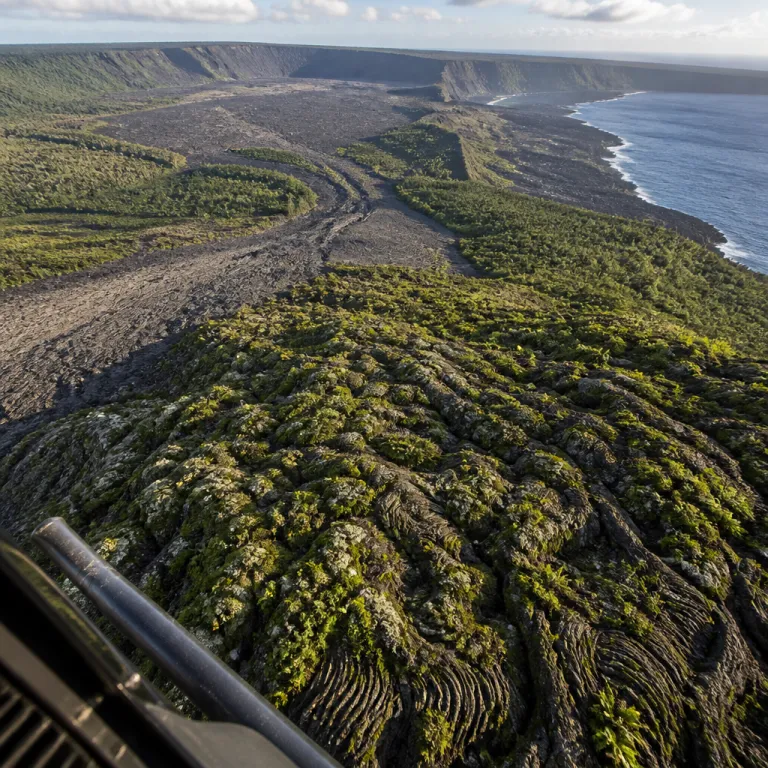
On a clear morning flight, your pilot will often trace the fresh black flows that spilled from Kilauea volcano toward the sea, then bank low enough that you can see steam rising where rain hits still warm rock. During late afternoon helicopter tours, the contrast between the darkening sky and the lava glow intensifies, which is why some couples choose a later departure even if it means more variable air. Ask your pilot in advance how close the current safety protocols allow them to fly to the vents, because regulations and conditions shift with each eruption phase.
How eruption science shapes the luxury flight narrative
The same helicopters that carry you over Kilauea volcano also support USGS and Hawaiian Volcano Observatory teams during focused aerial survey campaigns. For example, during the 2018 lower East Rift Zone eruption and again in 2020–2022 summit activity, USGS used low altitude flights, lidar equipment and thermal cameras to refine lava lake depth estimates and update topographic maps, which in turn inform where tourism flights can safely operate. When you fly with an operator that collaborates closely with these agencies, you benefit from the most current understanding of vents, gas plumes and no fly zones.
For couples staying on Hawaiʻi Island, this science forward context adds depth to the romance of a Big Island helicopter tour. You are not just chasing spectacle; you are witnessing a landscape that researchers monitor to improve hazard assessment and protect communities from future flows. Pilots who are comfortable explaining how Mauna Loa and Kilauea interact, and how the lava lake volume has changed over time, tend to deliver a more layered experience than those who simply point out shapes in the rock.
Ask during booking whether your pilot has specific training for low level flights over Kilauea, because experienced pilots read subtle changes in plume behavior and wind that matter at 500 feet. Couples who value detail often prefer a private helicopter tour so they can ask more questions about eruption history without competing with a full cabin. That intimacy of conversation, especially when paired with a quiet enclosed Hawaiʻi helicopter, can feel as luxurious as any amenity back at your hotel.
Coastlines, waterfalls and the routes that justify the splurge
While Kilauea volcano is the headline, the coastal segments of a Big Island helicopter tour often linger longest in memory. North of Hilo, the Hāmākua Coast unspools as a wall of green cliffs, with waterfalls dropping hundreds of meters into narrow valleys that have no road access. From a helicopter, you see how the island’s wet side funnels rainwater from Mauna Kea and Mauna Loa into these hidden amphitheaters before it spills into the Pacific.
Most helicopter tours that depart from Hilo Airport include at least a pass over this coastline, while longer flights big enough in scope to circle the island add the deep valleys near the Kohala Coast. Couples staying at resorts along the Kohala Coast often appreciate seeing their own hotel from the air, perched on ancient lava flows that once behaved much like the ones now active at Kilauea volcano. A well designed flight traces a narrative arc from old flows under your infinity pool to new flows reshaping the island’s eastern flank.
Some operators market specific waterfall focused routes, which can be a good fit if you have already done a land based volcano tour Kona side. These flights may trade a few minutes over the crater for extra time hovering near remote waterfalls, where you can photograph rainbows forming in the spray without another visitor in sight. If you are splitting your stay between island Kona and Hilo, consider booking one helicopter tour from each side to experience both the lava centric and waterfall centric perspectives.
Comparing Kona and Hilo departures for luxury travelers
A Kona departure works best if you are anchored at a west coast resort and prefer minimal transfer time to the heliport. The trade off is that a significant portion of the minute tour will be spent crossing the island’s interior before you reach Kilauea volcano and the lush Hāmākua waterfalls. For couples who enjoy the aerial view of Mauna Loa’s broad shield and the patchwork of coffee farms near island Kona, that transit segment is part of the experience rather than a drawback.
Hilo departures, by contrast, place you almost immediately over rainforest and sea cliffs, which is ideal if your priority is maximum time over waterfalls and the active crater. If you are staying in a rainforest lodge near Volcano or in a historic Hilo hotel, the short drive to Hilo Airport keeps the logistics simple and the focus on the flight. Some luxury travelers choose to overnight in Hilo specifically to catch the earliest morning helicopter tours, when the air is calmest and the light is cleanest for photography.
When comparing tour options, ask operators to map out their exact routes over a printed Big Island chart so you can see how much coastline, crater time and interior crossing each flight includes. Couples who value coastal scenery may accept a slightly shorter volcano segment in exchange for more time along the Hāmākua and Kohala Coast cliffs. Those who are deeply interested in eruption behavior might instead choose a tour that loops repeatedly over Kilauea volcano, even if it means skipping some waterfalls.
Doors off, private cabins and how to choose the right format
For photography driven couples, a doors off helicopter configuration is often the most tempting way to fly over Kilauea volcano. With no glass between you and the air, colors feel sharper, the heat from the lava is more tangible and there are no reflections to fight in your images. The trade off is exposure to wind and cooler temperatures at altitude, which can feel intense on a longer minute tour that also includes the waterfalls and the Kohala Coast.
Enclosed cabin helicopter tours, including many flights operated by Rainbow Helicopters and other major Hawaiʻi helicopter brands, prioritize comfort and conversation. These aircraft suit travelers who want to talk quietly with their pilot about the geology of Hawaiʻi Island, the history of Mauna Loa eruptions and the way resorts have been built on older flows. If your hotel stay is centered on spa time and slow mornings, an enclosed island helicopter flight often feels more aligned with that cocooned rhythm.
Private helicopter charters are the most flexible option, and they pair naturally with luxury suites and villas that already emphasize privacy. A private helicopter tour allows you to adjust the minute by minute emphasis between Kilauea volcano, the Hāmākua waterfalls and the Kohala Coast, depending on weather and your interests. Couples celebrating a milestone often use a private flight to link two hotels on opposite sides of the Big Island, turning a simple transfer into a dramatic aerial journey.
How long should your flight be ?
Shorter flights of around 45 minutes focus tightly on Kilauea volcano and the immediate surrounding craters, which works well if you have already driven the Saddle Road and seen the island interior from the ground. A 60 to 75 minute tour adds time over the Hāmākua waterfalls and usually a pass along part of the Kohala Coast, giving a more complete sense of Hawaiʻi Island’s contrasting climates. The longest tours big enough to circle the entire island can run 90 to 120 minutes, which is a serious commitment in both budget and attention but rewards travelers who want a comprehensive aerial atlas of their trip.
When you book tour seats, ask operators how much of the advertised duration is actual flight time versus boarding and safety briefing. Some couples prefer to split their aerial time into two different routes on different days rather than one very long minute tour, especially if they are prone to motion sensitivity. If you are staying at a property with an exceptional spa, such as the Mauna Kea complex whose new wellness facilities are profiled in detail on this in depth spa feature, consider scheduling a massage after your helicopter tour to ease any residual tension.
Remember that every extra minute of flight over Kilauea volcano or the waterfalls carries a cost, so be clear about your priorities. Couples who care most about the active crater may be satisfied with a focused Big Island volcano helicopter tour and then explore the Hāmākua Coast by car. Those who want the full aerial story of Hawaiʻi Island’s volcanoes, valleys and resorts will find that a longer flight justifies itself every time the pilot banks and a new coastline comes into view.
Pricing, timing and how to integrate flights into a luxury stay
For a premium Big Island helicopter tour over Kilauea, expect shared flights to start in the mid hundreds of dollars per person and private helicopter charters to climb into four figures. As of 2024, many standard shared tours run roughly US$350–US$550 per person, while private doors off or luxury cabin charters commonly range from about US$1,800 to US$3,500 per hour depending on aircraft size. Prices vary with flight duration, aircraft type and whether you are flying doors off or in an enclosed cabin, so always compare tour options line by line.
During peak summer and major holiday periods, the most desirable morning departure slots can sell out several weeks in advance. If your itinerary is built around a few key experiences, book tour seats as soon as your hotel dates are confirmed, especially for private helicopter charters. Last minute availability is more common for midday flights, but those flights may coincide with bumpier air and more cloud build up over Kilauea volcano and the Hāmākua waterfalls.
Morning flights generally offer the best combination of smooth air, clear views and softer light on the Big Island’s lava textures. Late afternoon departures, on the other hand, can make the lava glow at Kilauea volcano more dramatic, especially when the crater is in an active fountaining phase. Couples who are staying multiple nights on Hawaiʻi Island might schedule one morning helicopter tour from Hilo and a later day tour Kona side to experience both moods.
Reading and using reviews wisely
Online reviews for helicopter tours over Hawaiʻi Island can be emotionally charged, because the experience is often a trip highlight or a major disappointment if weather intervenes. Focus on reviews that mention specific details such as how the pilot handled cloud cover over Kilauea volcano, whether the promised waterfalls were actually visible and how the company communicated about delays. A pattern of praise for clear explanations and safety briefings is more meaningful than a handful of ecstatic one line comments.
When comparing operators, look for mentions of collaboration with USGS or the Hawaiian Volcano Observatory, as this suggests a serious approach to eruption monitoring and route planning. Reviews that describe pilots adjusting routes in real time to chase clearer air over the Hāmākua Coast or to extend time over an active lava lake are particularly valuable. Couples who care about service will also notice whether staff helped them book tour changes smoothly when weather forced cancellations, which is where a true family business often shines.
Remember that a Big Island volcano helicopter tour is weather dependent by nature, so even the best operator will occasionally have to cancel or reroute. Many companies will scrub flights when winds exceed safe thresholds, when low clouds obscure the crater or when visibility drops below Federal Aviation Administration minimums, then either rebook you or issue a refund according to their policy. Build flexibility into your hotel schedule, ideally leaving a backup morning free in case your first departure is scrubbed so you can fly when conditions are best rather than feeling pressured to go up in marginal visibility.
Safety, comfort and the questions to ask before you fly
Helicopter flights over Kilauea volcano are considered safe when operated by experienced pilots under clear protocols, and the same standards that guide scientific aerial surveys also inform tourism routes. Before you book, ask how often the company flies over Kilauea, what their minimum visibility requirements are and how they decide when to cancel. A serious operator will be transparent about these thresholds and will emphasize that no view of lava or waterfalls is worth compromising safety.
From a comfort perspective, wear long pants, closed shoes and a light layer, even if you are coming straight from a poolside lounger at your Kohala Coast resort. Doors off flights can feel significantly cooler at altitude, especially on longer minute tours that cross the saddle between Mauna Loa and Mauna Kea, while enclosed cabins are more forgiving. Avoid loose accessories that can fly in the rotor wash, and follow every instruction from the ground crew and pilot without improvisation.
Common pre flight guidance from both tour companies and scientific teams includes three simple points: check flight schedules, wear comfortable clothing, follow safety instructions. To turn that into a practical checklist, confirm your departure time and check in window the day before; pack photo gear with straps and fully charged batteries; dress in dark, fitted layers to reduce reflections; secure IDs, cards and any medication in zip pockets; and arrive early enough to listen carefully to the briefing and ask last minute questions. Couples who treat a Big Island helicopter tour with the same respect they would give to a technical hike or a manta ray night dive tend to have smoother experiences.
How science flights inform tourism safety
Recent aerial survey campaigns over Kilauea volcano have run for several weeks at a time, with helicopters carrying USGS scientists, lidar equipment and thermal cameras. During the 2018 eruption, for example, USGS documented lava channel evolution and vent locations almost daily, and similar multi week campaigns accompanied the December 2020 and September 2021 summit events. These missions refine estimates of lava lake depth and volume, track changes in vent locations and update hazard maps that guide both civil defense and tourism operators.
When you fly with a company that stays close to this scientific community, you are effectively riding on the back of that research. Pilots briefed on the latest data know which parts of the crater rim are most stable, how gas plumes are drifting on a given day and where to position the aircraft for both safety and views. This is especially important when Kilauea shifts from quiet glowing phases into more vigorous fountaining, because the safest vantage points at 500 feet can change quickly.
If you are the kind of traveler who reads about Mauna Loa’s last eruption before checking in to your hotel, ask operators directly about their relationship with USGS and the Hawaiian Volcano Observatory. Their answers will tell you as much about their culture as any marketing copy or glossy brochure. In a destination where the landscape is still being written in fresh lava, that alignment between science and hospitality is the ultimate luxury.
Key figures from the sky over Kilauea
- The lava lake within Kilauea’s summit crater has been measured at depths of around 180 meters (about 593 feet) according to USGS data from late 2021, which means even a helicopter hovering at 500 feet above the rim is still looking down into a vast vertical void.
- USGS estimates during that same period placed the lava lake volume at roughly 23 million cubic meters, a scale that helps explain why even brief fountaining episodes are visible from helicopter tours many kilometers away.
- Scientific aerial survey campaigns over Kilauea typically run for several weeks at a time, mirroring the sustained operational tempo that tourism operators must maintain during peak travel seasons on Hawaiʻi Island.
- Waterfalls along the Hāmākua Coast can exceed 300 meters (about 1,000 feet) in height, and several of the tallest cascades are accessible only by air, which is why longer helicopter tours that include this coastline command higher prices.
- Most luxury focused Big Island helicopter tour products cluster in the 45 to 90 minute range, balancing fuel costs, passenger comfort and the desire to include both Kilauea volcano and at least one major coastline segment.
FAQ about helicopter flights over Kilauea and the Big Island
Is it safe to fly over Kilauea ?
Is it safe to fly over Kīlauea? Yes, with experienced pilots and proper precautions. Reputable operators coordinate closely with USGS guidance, avoid restricted zones and cancel flights when visibility or wind conditions fall below strict thresholds. Choosing a company with a strong safety record and clear communication is more important than shaving a few dollars off the ticket price.
What can I actually see from 500 feet above the crater ?
From around 500 feet above Kilauea volcano, passengers on a Big Island helicopter tour can see the outline of the summit crater, the active lava lake when present, and the complex patterns of older flows radiating across the landscape. During active phases, you may witness lava fountaining, crustal plates drifting on the molten surface and gas plumes rising from vents. In quieter periods, the view shifts to glowing cracks, collapsed pit craters and the broader context of Mauna Loa and the surrounding highlands.
How long do helicopter flights over Kilauea usually last ?
Tourism flights over Kilauea typically range from about 45 minutes for focused crater routes to 90 minutes or more for itineraries that also include the Hāmākua waterfalls and the Kohala Coast. Scientific aerial surveys, by contrast, may operate daily over a period of roughly three weeks to collect consistent data. For most luxury travelers, a 60 to 75 minute flight offers the best balance between depth of experience and comfort.
Should I depart from Kona or Hilo for the best views ?
A Kona departure is ideal if you are staying at west coast resorts and want to combine views of Mauna Loa, coffee country and Kilauea volcano in a single loop. Hilo departures place you closer to the active crater and the Hāmākua waterfalls, which means more time over rainforest and lava and less time crossing the island interior. Couples who have the flexibility often plan one flight from each side on different days to experience both perspectives.
When is the best time of day to fly ?
Morning flights usually offer the calmest air and the clearest views over Kilauea volcano and the Big Island’s coastlines, which is ideal for photography and for travelers prone to motion sensitivity. Late afternoon flights can make the lava glow more dramatic when the crater is active, but they are more likely to encounter clouds and wind, especially over the mountains. If your schedule allows, book a morning slot first and keep an afternoon as a backup in case weather forces a change.