Sleeping inside a museum: why this beach hotel feels different
On the Kohala Coast of Hawaiʻi Island, Mauna Kea Beach Hotel feels less like a typical beach resort and more like a museum you can sleep in. Conservation-minded philanthropist Laurance Rockefeller imagined the mauna and kea landscape as a stage for an art collection that would connect guests to Hawaiʻi, the wider Pacific Rim and the Asia Pacific region in one sweeping gesture. From the moment you step into the hotel lobby, the scale and quality of the art culture on display quietly signals that this is not just another beach hotel on the Big Island.
The Rockefeller collection at Mauna Kea began as roughly 1,600 pieces of Asian, Oceanic and Hawaiian art and artifacts, placed not in glass cases but along corridors, lanais and stairwells. According to the hotel’s own historical overview and collection notes, the restored art collection still threads through the Mauna Kea resort, so guests encounter museum-grade pieces on the way to breakfast, the golf course or the curve of Kaunaʻoa Bay, often called Kea Beach by regulars. That sense of living with the art, rather than visiting it behind ropes, is what makes this hotel art experience fundamentally different from newer rivals on the island.
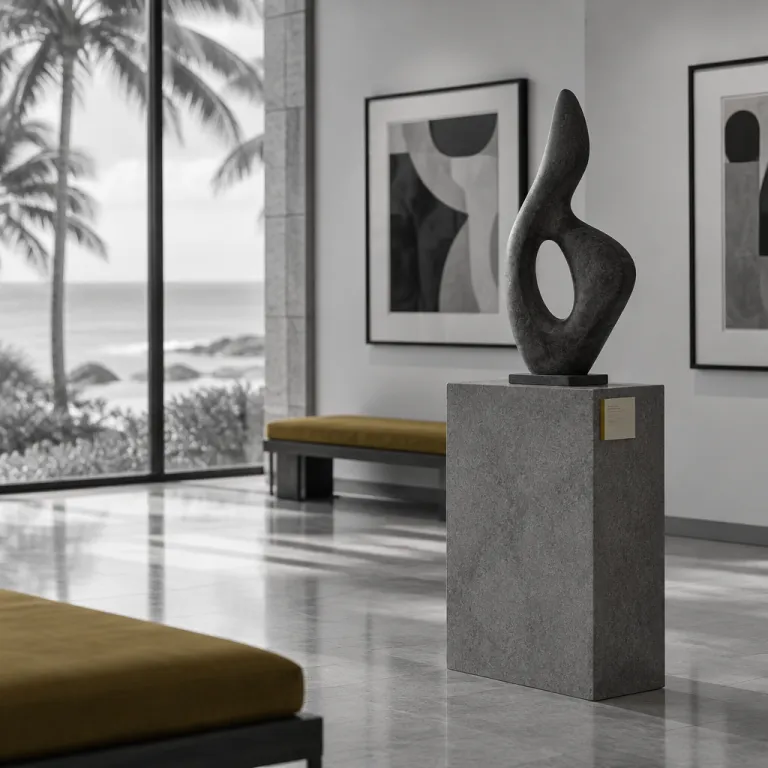
Everywhere you turn, the building frames both the beach and the art, so the hotel becomes a kind of open-air museum. The Mauna Kea setting on the Big Island’s dry Kohala Coast lets natural light wash over stone sculptures and carved wood pieces, changing their mood from morning to late afternoon. If you care about culture as much as you care about a perfect swim, this resort quietly rewards you every time you slow down between the ocean and the galleries in the halls.
How to tour the Rockefeller art collection as a guest
You do not need to be an art historian to navigate the Mauna Kea art collection. The hotel has long treated the property as a self-guided museum, with printed maps, plaques and, when available, a simple art app that lets guests build their own tour between the lobby, the Kea Beach wing and the main resort tower. Because the art collection lives in public spaces, you can design a slow loop that fits between a morning swim and an afternoon round on the golf course.
Start near the main entrance of the hotel, where staff can point you toward the signature pieces and the quietest corridors. One route takes you from the lobby, past the open-air staircases lined with hotel art, down toward the beach level where the sound of the Pacific filters through the museum-like spaces. Another tour option moves inland through the resort, linking the Mauna Kea galleries with off-property cultural stops such as the Holualoa art village, where coffee, ceramics and creativity above the Kona Coast offer a complementary view of Big Island art culture via this insider guide to Holualoa art village.
Because the collection is integrated into the Kea resort layout, you can return to favorite pieces at different times of day and notice new details. Guests who care about Hawaiian culture often pair a slow art tour with time at nearby Hapuna Beach, using the contrast between the quiet, museum-like corridors and the open sand to frame their stay. If you are a solo traveler, walking these routes alone can be one of the most meditative experiences on the Big Island, a way to let the island’s history sink in between swims.
Practical sidebar: accessing Mauna Kea art tours
Typical viewing hours for the Rockefeller collection at Mauna Kea follow general resort access, with most public areas open from early morning until late evening. Guided tours, when offered, usually run during daytime hours and are often complimentary for registered guests; non-guests may be asked to register or join subject to availability. For current tour times, any associated costs and accessibility details, contact the Mauna Kea Beach Hotel concierge or front desk directly by phone or email before your visit.
Signature pieces: from Buddha to Hawaiian quilts and kapa
Certain works in the Mauna Kea Beach Hotel Rockefeller art collection are worth seeking out with intention. One of the most striking pieces is the twelfth-century pink granite Indian Buddha, a serene figure that anchors the lobby and sets a contemplative tone before you even glimpse the beach. Nearby, a Papua New Guinea ancestor figure stands with quiet authority, reminding guests that this museum-like hotel looks across the entire Pacific Rim, not just toward mainland visitors.
Rockefeller’s curatorial vision also foregrounded Hawaiian culture through textiles, especially Hawaiian quilts and Hawaiian kapa, the bark cloth that once wrapped Native Hawaiian life from ceremony to daily use. The collection includes fourteen kapa pieces by master maker Malia Solomon and around thirty quilts by Mealii Kalama and parishioners from Kawaiahaʻo Church, figures documented in hotel collection materials and Bishop Museum–adjacent scholarship on Hawaiian textiles. Each quilt and kapa panel carries its own story of community, faith and restoration, turning the corridors into a quiet gallery of fabric memory.
Many guests compare the experience to walking through a small wing of Bishop Museum, the leading museum of Hawaiian history and culture in Honolulu, but with the added intimacy of staying overnight among the pieces. If you are planning a wider cultural itinerary, pairing time at Mauna Kea with a visit to Bishop Museum and to the sacred coastal complex of Puʻuhonua o Hōnaunau, explored in depth in this guide to the Big Island’s place of refuge, creates a powerful arc. That combination lets you see how Native Hawaiian art, quilts and kapa move between museum, sanctuary and resort, each context changing how the pieces feel under your gaze.
Restoration, stabilization and Rockefeller’s Pacific vision
Over time, the Mauna Kea Beach Hotel Rockefeller art collection has required careful restoration and stabilization to keep it museum-worthy in a working resort. Hotel press releases and conservation reports describe award-winning restoration work that brought more than 500 pieces back to life, a quiet effort that respected both the original curatorial intent and the realities of salt air, strong light and constant guests. Conservation teams focused on restoration stabilization for fragile Hawaiian kapa, aging wood carvings and textiles, ensuring that the art culture woven through the hotel can survive another generation of Big Island travelers.
Laurance Rockefeller’s original idea was to position the Mauna Kea resort as a crossroads of the Asia Pacific and the Pacific Rim, using art to make that geography visible. By placing Indian, Japanese, Oceanic and Hawaiian pieces side by side, he created a hotel art narrative that moves from the island outward, then back again to Native Hawaiian forms. The result is a collection that feels both global and rooted, a museum-like experience that still centers the beach, the mauna and the kea headlands that define this stretch of the Kohala Coast.
For guests, the impact of this restoration work is subtle but real, from the renewed colors in Hawaiian quilts to the softened sheen on carved figures. Walking from the golf course back to your room, you notice how the stabilized textiles now hold their patterns more clearly, how the stone pieces catch the late light above Kea Beach. That attention to restoration and stabilization signals that the resort values culture as much as comfort, an important distinction when you are choosing where to stay on Hawaiʻi Island.
Choosing Mauna Kea for an art led stay on the Kohala Coast
On a coastline lined with polished resorts, the Mauna Kea Beach Hotel art collection gives this property a distinct personality. Newer hotels may offer larger pools or more recent architecture, but few can match the feeling of walking through a living museum on your way to the sand. If you are the kind of traveler who reads wall labels as eagerly as cocktail menus, this beach hotel will likely feel like the natural base for your Big Island trip.
Location still matters, and here the Mauna Kea resort sits on one of Hawaiʻi’s most graceful natural bays, with Kea Beach curving in a near-perfect crescent below the hotel. From this point on the Kohala Coast, you can easily reach Hapuna Beach to the north, explore coffee country and art studios above Kona, or head south toward cultural sites without sacrificing your daily swim. For a different but complementary oceanfront base, some travelers pair a few nights here with time at a refined condominium-style property in Kailua Kona, such as the one profiled in this review of a refined oceanfront base on the Big Island.
Solo explorers often find that the combination of art, beach and understated service at Mauna Kea encourages a slower rhythm. Mornings might start with a quiet lap along the shoreline, followed by an hour tracing the hotel art route before the day’s first coffee. By night, the sound of the Pacific outside your lanai and the knowledge that museum-grade pieces hang just down the hall create a sense of staying inside a cultural institution rather than a generic resort.
Practical tips for art focused guests on Hawaiʻi Island
Planning an art-led stay at Mauna Kea means thinking about your days as a balance between the collection, the beach and the wider island. Start by requesting information on the Mauna Kea Beach Hotel Rockefeller art collection when you book, so you can time your arrival to join any scheduled tour or to download the latest version of the hotel’s art guide. If you prefer to wander alone, build in at least half a day across your stay to walk the corridors slowly, pausing at the quilts, the kapa and the major stone pieces without rushing to the golf course or the pool.
Beyond the hotel, consider how the Big Island’s other cultural hotspots can extend what you see on the Kohala Coast. A visit to Bishop Museum on Oʻahu, either before or after your time at the resort, deepens your understanding of Hawaiian quilts, Hawaiian kapa and Native Hawaiian history, so the hotel art feels richer when you return to it. On Hawaiʻi Island itself, pairing Mauna Kea with small galleries, working studios and historic sites turns your trip into a moving museum, with the resort as your most comfortable gallery.
Finally, remember that this is still a beach hotel, and the art culture here is meant to live alongside swims, sunset drinks and unhurried meals. Let yourself move between the museum-like spaces and the open-air terraces, noticing how the island light changes both the ocean and the art collection across the day. That rhythm, more than any single piece, is what makes staying at Mauna Kea feel like inhabiting a thoughtfully curated museum on the edge of the Pacific.
FAQ
Is the Rockefeller art collection at Mauna Kea open to non guests ?
The Mauna Kea Beach Hotel Rockefeller art collection is primarily designed for registered guests, because most pieces sit in guest corridors, lounges and other semi-private areas. Non-guests can sometimes view works in the main lobby and public spaces, but access to the full hotel art route is usually limited to those staying at the resort. If you are not a guest and wish to see specific pieces, contact the hotel in advance to ask about current policies.
How long should I plan for an art tour inside the hotel ?
Most guests find that a focused walk through the main areas of the Mauna Kea Beach Hotel Rockefeller art collection takes about one to two hours. If you want to read plaques, compare quilts and kapa in detail and photograph favorite pieces, plan closer to half a day spread across morning and late afternoon. Because the art lives along routes to the beach and restaurants, you can also explore it in shorter segments between other activities.
Are there guided tours of the Mauna Kea art collection ?
The resort has periodically offered guided tours of the art collection, led by staff who know the history of the hotel and the individual pieces. Availability can change, so it is best to ask about scheduled tours when you book or at check-in. Even when no formal tour is running, the front desk can usually provide maps or digital resources to help you design your own route.
How does Mauna Kea compare to other cultural stays on the Big Island ?
Mauna Kea stands out because the art collection is integrated into the architecture, making the entire hotel feel like a museum rather than just decorating a lobby. Other properties on the Big Island may feature local art or host cultural programming, but few have a curated, historically significant collection of this scale. If art and culture are central to your trip, Mauna Kea works well as a primary base, complemented by day trips to galleries, historic sites and other resorts.
Can families with children enjoy the art collection at Mauna Kea ?
Families are welcome, and many parents use the Mauna Kea Beach Hotel Rockefeller art collection as a gentle way to introduce children to museum etiquette. Because the pieces are in open spaces, it is important to remind younger guests not to touch the art and to move carefully in narrower corridors. Short, themed walks between the pool and the room often work better for children than a single long tour.