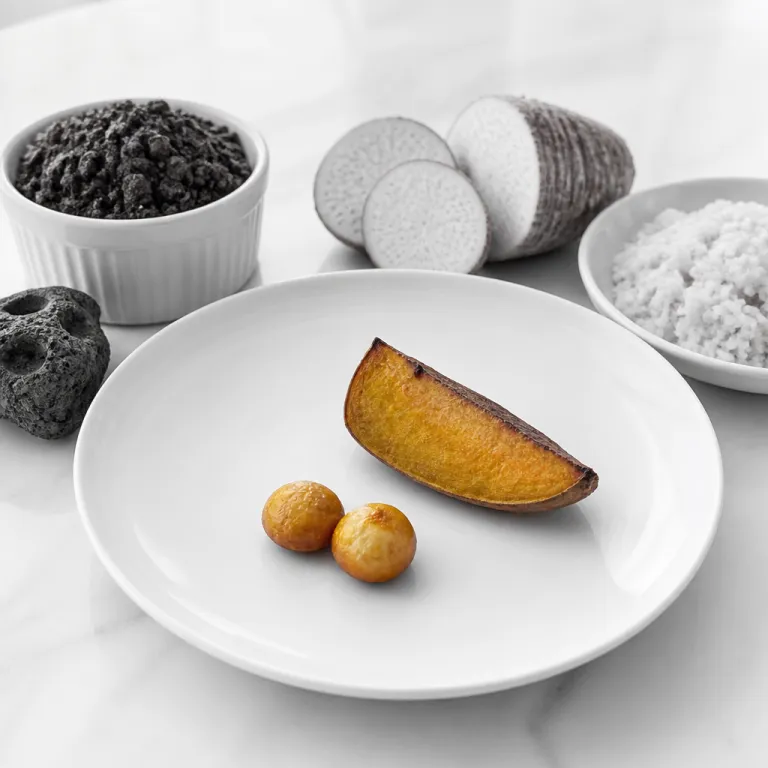
From fresh lava to fertile soil: the island’s quiet transformation
On Hawaiʻi Island, every luxury plate begins with lava turned soil. Basaltic rock from Kīlauea and Mauna Loa breaks down through biological weathering and chemical weathering, creating volcanic soils that feel surprisingly soft underfoot. Over decades, nitrogen-fixing lichens colonize the black rock, then mosses and roots widen cracks, and within less than a century dense forests can cover lava fields in many high-rainfall areas.1
This slow alchemy underpins volcanic soil agriculture on Hawaiʻi Island, where new land is constantly being written into the map. Volcanic eruptions create new land, and local communities and agricultural organizations patiently wait as time, rainwater and tropical heat turn sharp flows into arable areas. The event type that matters most for your dinner reservation is soil formation, the transformation of lava into fertile soil that can support agriculture and, eventually, the island’s most refined dining rooms.
Across roughly 21,000 acres of agricultural land near Hilo alone, volcanic soils now support a mosaic of crops that feed resort kitchens and independent chefs, according to estimates from Hawaiʻi County and University of Hawaiʻi extension mapping.2 These soils are high in mineral nutrient content, yet their structure varies dramatically between young, porous flows and older, clay-rich profiles. That contrast explains why you can drive 30 minutes from a stark lava field to a lush farming valley and taste an entirely different expression of Hawaiʻi in your glass and on your plate.
The Kona coffee belt: where altitude, ash and water shape flavor
For couples booking a stay along the leeward coast, the most intimate way to understand volcanic soil agriculture on Hawaiʻi Island is through a cup of Kona coffee. The famous coffee belt wraps around the western slopes of Hualālai and Mauna Loa between roughly 300 and 760 m, where volcanic soils, cloud cover and afternoon showers align.3 Here, Hawaiian farmers work narrow strips of land that feel almost vertical, yet the farming remains surprisingly sustainable and small scale.
The basalt-based soil in these growing areas is young enough to be mineral rich but old enough to hold water, which matters in a region with strong sun and limited surface streams. Coffee trees sink roots into well-drained soils that are high in potassium, phosphorus and trace elements, and those nutrient levels contribute directly to the dense body and chocolate notes prized by roasters. One longtime grower near Holualoa puts it simply: “The lava gives us minerals, the clouds give us shade, and the slope gives us drainage — Kona coffee needs all three.”
Many estates invite guests from nearby luxury hotels to walk the rows, taste cherries and see how Hawaiian agriculture still relies on hand picking. It is not the resort luau, but the coffee farm where the roaster picks the cherry the morning you arrive, and that immediacy changes how you read a hotel’s breakfast menu. When you see single-estate Kona on a tasting flight or in a dessert pairing, you are tasting volcanic soils, careful farming and the patient work of Hawaiian farmers who have learned exactly how much shade, water and elevation their crops need. For a deeper look at how this terroir shows up in seasonal fruit, many travelers pair a coffee tour with a mango-focused itinerary built around rare mango varieties and farm sales on the Big Island.
Hamakua and Hilo: older soils, lush valleys and resort menus
Drive from the Kona side over the saddle and the island’s volcanic soil agriculture reveals a different face near Hilo and along the Hāmākua Coast. Here, centuries of rainfall have deepened the soil profile, turning once raw volcanic land into thick, dark earth that feels almost spongy underfoot. These older soils are rich in organic matter and nutrient content, and they support crops that struggle on the drier western slopes.
Macadamia orchards, mushroom houses and vanilla vines cluster in these cooler, wetter areas, where volcanic soils have weathered into complex clays. The farming here leans into shade, mist and abundant water, with Hawaiian farmers using windbreaks and agroforestry to keep agriculture sustainable while protecting streams that cut down to the ocean. As one Hāmākua mushroom grower told a University of Hawaiʻi field day, “Our fungi are basically translators — they turn deep, mineral-rich soil into flavor.”4
Luxury travelers who base themselves near Hawaiʻi Volcanoes National Park can see this gradient almost hour by hour. Elevated stays near Namakanipaio, such as the properties highlighted in our guide to luxury bases for Hawaiʻi Volcanoes National Park, place you between fresh flows and mature forests, where soil ages change within a short drive. Spend a morning walking cooled lava in the park, then an afternoon at a nearby farm tasting taro, cacao or leafy greens grown in deep, moisture-holding soils, and the island’s agricultural story becomes impossible to separate from its geology.
From farm to fine dining: how resorts translate volcanic terroir
On Hawaiʻi Island, the most compelling luxury dining does not hide its agricultural roots. Chefs on the Kohala Coast and in Hualālai speak fluently about volcanic soils, microclimates and the Hawaiian farmers who supply their kitchens. They understand that volcanic soil agriculture on Hawaiʻi Island is not a backdrop but the main narrative thread.
At places like Merriman’s in Waimea, menus often name specific farms and growing areas, linking each dish to a particular elevation and soil type. ULU Ocean Grill at Hualālai and Hau Tree Cantina in Kailua-Kona build relationships with Hawaiian farmers who manage both dryland and windward plots, allowing them to balance crops from high, cool uplands with produce from warmer coastal lands. When a server explains that your salad greens come from a farm on older, nutrient-rich soils near Waimea while your grilled fish is paired with vegetables grown on younger, more porous volcanic soils, they are quietly teaching geology through flavor.
Resorts that take this seriously often structure their wine and cocktail programs around the same idea. A Kona coffee–based espresso martini gains depth when the bar team can explain how basalt-derived soils, afternoon clouds and careful water management contribute to the beans’ intensity. On tasting menus, chefs might contrast a root vegetable grown in deep, moisture-retentive soil with one from a drier, rockier plot, letting you feel how volcanic land, agriculture and water use shape texture and sweetness on the plate.
Where to stay for a front row seat to volcanic agriculture
Choosing the right hotel on Hawaiʻi Island can bring volcanic soil agriculture into the heart of your stay. Along the Kohala Coast, oceanfront resorts sit on relatively young lava, yet they look mauka toward the high slopes where coffee, macadamia and vegetable farming define the island’s agricultural backbone. This juxtaposition lets you sleep on rock that was once molten while eating breakfast sourced from soils that have been weathering for centuries.
Properties with strong relationships to Hawaiian farmers tend to offer more nuanced farm-to-table experiences and more meaningful excursions. Some concierge teams can arrange private tours of working farms, where you walk between rows of crops, feel the soil texture change between plots and talk directly with growers about sustainable water use and nutrient management. When you return to the resort for dinner, the same crops appear on the menu, closing the loop between land, agriculture and luxury hospitality.
On the northwestern shore, one standout option is the Fairmont Orchid, where beachfront luxury meets easy access to upland farms and the island’s volcanic story. Our detailed reviews of the Fairmont Orchid for beachfront luxury on the Kohala Coast explain how the property integrates local agriculture into its dining and guest experiences. Whether you choose a coastal resort or a rainforest retreat near Volcano, prioritizing hotels that engage deeply with volcanic soils and Hawaiian agriculture will enrich every meal and every drive across this extraordinary island.
FAQ
How long does it take for lava to become usable soil for farming ?
Lava begins its transformation into soil as soon as pioneer species such as nitrogen-fixing lichens colonize the surface. Over decades, roots, rainwater and chemical reactions break the rock into smaller particles and start building organic matter. Dense forests can cover lava fields in less than a century in favorable climates, and in some areas Hawaiian farmers can begin limited agriculture within a few decades where cracks and ash deposits create pockets of soil.1
What crops grow especially well in volcanic soils on Hawaiʻi Island ?
Volcanic soils on Hawaiʻi Island support a wide range of crops thanks to their mineral richness and varied microclimates. Coffee thrives in the mid-elevation belts on the slopes of Hualālai and Mauna Loa, while macadamia nuts, taro, tropical fruits and mushrooms perform well in wetter, older soil areas near Hilo and Hāmākua. Sugar cane has a long history here too, and many newer farms now focus on cacao, vanilla and diversified vegetables for the island’s restaurants and resorts.
Is volcanic soil always fertile for agriculture ?
Fresh volcanic land is not immediately fertile, because it lacks organic matter and structure, even though the rock is mineral rich. As weathering progresses and plants add leaf litter and roots, the soil gains nutrient availability and water-holding capacity, becoming highly productive for agriculture. On Hawaiʻi Island, this process has created some of the most nutrient-rich soils in the Pacific, but farmers still need to manage erosion, pH and sustainable water use carefully.5
Where can travelers see volcanic soil agriculture up close on Hawaiʻi Island ?
Travelers can experience volcanic soil agriculture directly by visiting coffee farms in the Kona districts, macadamia orchards and mushroom operations near Hilo, and mixed crop farms along the Hāmākua Coast. Many of these farms offer tours that explain how different soil ages, elevations and rainfall patterns shape their crops. Pairing these visits with time in Hawaiʻi Volcanoes National Park, where you can walk on recent lava flows, makes the connection between volcano, soil and dining especially vivid.
How does volcanic soil agriculture influence luxury dining on the island ?
Luxury restaurants and resorts on Hawaiʻi Island build menus around ingredients grown in specific volcanic soils and microclimates, creating a strong sense of place on the plate. Chefs work closely with Hawaiian farmers to source coffee, fruits, nuts, vegetables and herbs that express the character of their growing areas, from dry upland slopes to moist windward valleys. This collaboration allows guests to taste the island’s geology in every course, turning volcanic soil agriculture into a central part of the high-end travel experience.
References
- USGS and Hawaiʻi Volcanoes National Park interpretive materials on primary succession and forest development on lava flows.
- Hawaiʻi County and University of Hawaiʻi College of Tropical Agriculture and Human Resources (CTAHR) summaries of agricultural land use near Hilo.
- University of Hawaiʻi CTAHR publications on the Kona coffee belt, elevation ranges and climate conditions.
- University of Hawaiʻi extension field day notes and grower interviews from Hāmākua mushroom and specialty crop farms.
- USDA NRCS soil surveys describing Andisols and volcanic ash soils on Hawaiʻi Island.