How Hawaii's reef safe sunscreen law shapes luxury stays on the Big Island
On Hawaiʻi Island, the conversation about sunscreen and coral reefs is no longer optional for luxury travelers. The statewide sunscreen law quietly shapes what you pack, what your hotel stocks and how you move through the water. Understanding how Hawaii’s reef safe sunscreen rules apply on the Big Island lets you align a romantic escape with the island’s marine reality.
Hawaii State Legislature passed a sunscreen law that bans the sale and distribution of sunscreens with oxybenzone and octinoxate without a prescription. The statute is codified in Hawaii Revised Statutes §342A-72, which details the prohibited active ingredients and effective dates. This means you can still technically use a chemical sunscreen you brought from home, but you cannot legally buy those formulas on the island unless a doctor prescribes them. The intent is clear though, because the legislation targets the active ingredients most linked to coral bleaching on every Hawaiʻi reef, from the Kona coast to Hilo’s tide pools.
For couples booking premium rooms along the Kohala Coast, this reef conscious framework is now part of the luxury vocabulary. Resorts that once lined gift shop shelves with glossy chemical sunscreen brands now curate mineral sunscreens with zinc oxide and titanium dioxide instead. When you see a pool attendant gently steering guests toward a compliant sunscreen, you are watching Hawaii’s reef safe sunscreen regulations on the Big Island play out in real time, woven into everyday service rather than presented as a separate eco-lecture.
What the sunscreen law covers – and what it does not
The nuance that often surprises visitors is that Hawaii’s sunscreen law is a sales ban, not a blanket use ban. The statute prohibits retailers from selling sunscreens whose active ingredients include oxybenzone or octinoxate, but it does not send officers to the beach to check what is on your skin. That gap between legal language and on the ground behavior is where responsible luxury travel comes in.
On the Big Island, county level rules currently mirror the statewide approach, while Maui County has moved further. Maui County Council adopted Ordinance 5306 (codified in Maui County Code Chapter 20.26), which restricts the sale, distribution and use of non-mineral sunscreens in most county-controlled marine areas, effectively ensuring that only mineral-based products are promoted around many popular beaches. When you hop between the Big Island and Maui, the shift in available sunscreen ingredients and on-site guidance is immediate and instructive.
For Hawaiʻi Island, the expectation from hoteliers is evolving faster than the legal minimum. Leading properties treat the reef safe sunscreen law as a baseline, then build sustainability standards that echo how new hotels are, as one insider phrase goes, designed to disappear into the landscape. In practice, that means stocking only mineral sunscreen options, training staff to explain why chemical sunscreens containing oxybenzone are harmful and gently nudging guests toward reef friendly choices before they ever reach the water.
Reading sunscreen labels like a local marine biologist
Standing in a resort shop on the Big Island, the label of a sunscreen can feel like a chemistry exam. The simplest guide is this, because the sunscreen law targets specific active ingredients rather than brand names. If the active ingredients panel lists oxybenzone or octinoxate, that product is not a compliant sunscreen for sale in Hawaii.
Instead, look for mineral sunscreen formulas where zinc oxide or titanium dioxide are the only active ingredients. Some labels still use the older phrase oxide titanium, but the science is the same, because these mineral sunscreens sit on top of the skin and physically block ultraviolet rays. They are considered safe sunscreen options for coral reefs and marine life when they are non nano and free from unnecessary chemical additives.
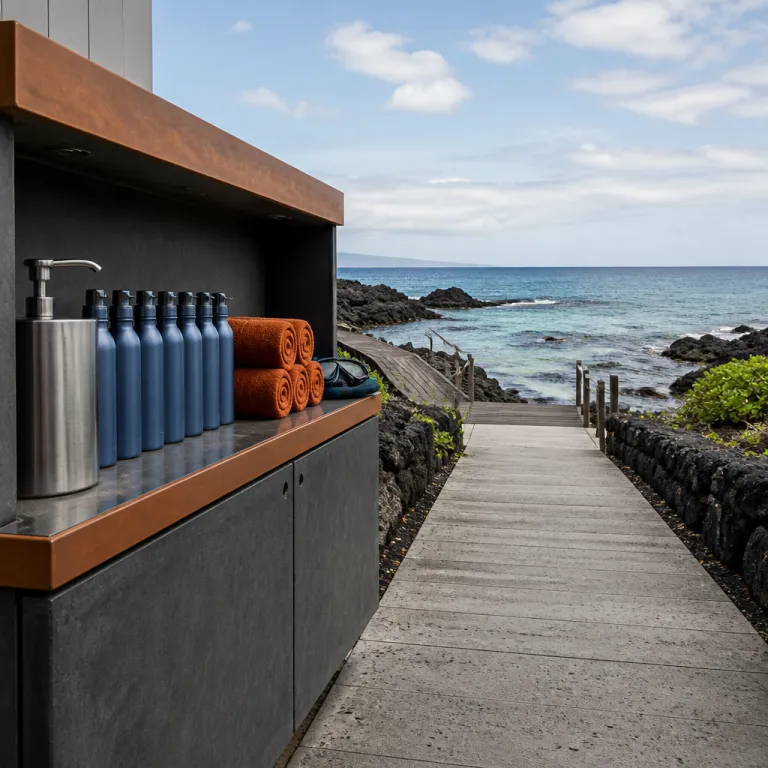
Luxury properties on Hawaiʻi Island increasingly curate this for you, especially along the Kohala Coast and in high end wellness retreats near Waimea. Many now offer complimentary reef safe pumps by the pool, sell travel sized mineral sunscreens at the spa and include a travel friendly compliant sunscreen in welcome amenities. At places like Four Seasons Resort Hualālai and Mauna Lani, Auberge Resorts Collection, staff often describe their mineral sunscreen partnerships as part of a broader commitment to Hawaii reef protection. For couples planning a full itinerary of refined experiences, from manta ray night swims to coffee farm tastings, it is worth pairing your packing list with a shortlist of luxury eco resorts on the island that already align with local conservation goals.
Why oxybenzone and octinoxate matter for coral reefs
The science behind Hawaii’s reef safe sunscreen rules is not abstract for locals who dive the Kona coast weekly. Coral reefs here are living architecture, sheltering marine life that underpins both culture and tourism. When chemical sunscreens wash off into shallow water, the impact is concentrated on the very coral heads that attract you to snorkel in the first place.
Laboratory and field studies, including research summarized by the National Oceanic and Atmospheric Administration (NOAA) in its sunscreen and coral reef guidance and peer reviewed work in journals such as Archives of Environmental Contamination and Toxicology, have shown that oxybenzone and octinoxate can contribute to coral bleaching, DNA damage and reproductive disruption in coral larvae. That is why the legislation explicitly targets these sunscreen ingredients, even though other chemical sunscreen compounds are still being studied for their marine impact. With roughly half of some Hawaiian coral reefs affected by bleaching in recent decades according to federal monitoring data from NOAA’s Coral Reef Conservation Program, the precautionary principle has become part of Hawaii reef management.
For travelers, the takeaway is elegantly simple. Choose mineral sunscreen over any chemical sunscreen whenever you plan to enter the water, whether on the Big Island or in Maui. Then pair that with physical strategies like rash guards, wide brimmed hats and timing your swims for early morning or late afternoon, which reduces both UV exposure and the volume of sunscreen entering the marine environment.
How luxury hotels on the Big Island operationalize reef safe standards
On Hawaiʻi Island, the most forward thinking luxury resorts now treat reef protection as part of their brand identity. You see it in the way pool attendants explain safe sunscreen options and in the spa menus that highlight mineral sunscreen facials instead of chemical peels before ocean swims. This is not performative sustainability, but a response to a fragile coastline where lava rock meets shallow reef within a few meters of the sand.
Many properties along the Kohala Coast and in Kona have phased out retail sales of any chemical sunscreens, even those technically allowed under the current sunscreen law. Instead, they partner with mineral sunscreen brands that use non nano zinc oxide and titanium dioxide, often packaged in aluminum rather than plastic. Some include refillable compliant sunscreen stations near beach access points, so guests can reapply before stepping into the water without carrying a personal bottle.
The best of these hotels also integrate reef education into their guest experience. Short briefings before guided snorkel trips explain why certain sunscreen ingredients are harmful to coral reefs and how to move through the water without kicking coral. A sustainability manager at one Kohala Coast resort describes it as “teaching guests to fall in love with the reef in a way that keeps it intact for their next visit.” If you are curating a romantic itinerary that balances spa time with ocean adventures, pair your hotel choice with a set of refined, low impact experiences on the island that keep your footprint light while your memories stay vivid.
Beyond sunscreen: reef safe behavior for couples in the water
Even the most carefully chosen mineral sunscreens are only one piece of reef safe behavior. The way you move through the water around coral can either protect or damage decades of growth in a single kick. On the Big Island, where many reefs sit just offshore in knee deep water, that awareness becomes part of traveling well.
Start by treating every coral head as living, not as rock. Keep your body horizontal when snorkeling, maintain a few meters of distance from any coral reefs and avoid standing on the reef even when the current feels strong. Good guides will brief you on fin awareness, reminding you that a single misplaced kick can break coral branches that took years to form and shelter marine life.
For couples traveling with children or teens, this is an opportunity rather than a constraint. Frame Hawaii’s reef safe sunscreen law as a story about helping fish and turtles keep their home clean, then let kids help choose the mineral sunscreen they will use. In the water, turn reef etiquette into a game, asking who can keep their fins furthest from the coral while still spotting the most colorful species.
Planning your packing list: practical steps for compliant, elegant travel
Thoughtful packing is where sustainability and luxury quietly meet. Before flying to Hawaiʻi, audit your existing sunscreens and separate any chemical sunscreens that list oxybenzone or octinoxate as active ingredients. Those can stay for urban use at home, while your island kit focuses on reef safe products that respect Hawaii reef ecosystems.
Choose at least two mineral sunscreens with zinc oxide or titanium dioxide, ideally in different textures for face and body. Look for formulas labeled as water resistant, fragrance free and suitable for sensitive skin, because long days between pool, spa and ocean can stress even resilient complexions. Pack sun protective clothing so you can reduce the total amount of sunscreen needed, which further limits the load of sunscreen ingredients entering the marine environment.
Once on the Big Island, treat any complimentary compliant sunscreen at your hotel as a backup rather than your primary supply. Resort shops increasingly stock high quality mineral sunscreens, but availability can fluctuate during peak visitor periods when around ten million people pass through Hawaiʻi annually according to the Hawaii Tourism Authority. By arriving already aligned with the reef safe sunscreen expectations on the Big Island, you free your stay to focus on lava fields, Kona coffee and manta rays instead of last minute label reading.
Key figures on sunscreen and reefs in Hawaii
- Hawaii welcomes around ten million visitors per year according to the Hawaii Tourism Authority, which concentrates sunscreen use along popular beaches and reefs.
- Federal monitoring has found that roughly 50 % of some Hawaiian coral reefs have experienced bleaching in recent decades, underscoring why even incremental reductions in chemical sunscreen pollution matter.
- Hawaii was the first U.S. state to enact a statewide ban on the sale of sunscreens containing oxybenzone and octinoxate, setting a precedent later complemented by Maui County’s additional restrictions on non mineral sunscreens in many coastal areas.
- The Big Island’s accessible Kona and Kohala reef systems mean that shifts from chemical sunscreens to mineral sunscreens can have a direct, localized impact on nearby marine life.
FAQ about Hawaii's reef safe sunscreen rules for travelers
What ingredients are banned under Hawaii's sunscreen law ?
The statewide law bans the sale and distribution of sunscreens whose active ingredients include oxybenzone and octinoxate, unless you have a prescription. Retailers on the Big Island cannot legally stock these chemical sunscreens for general purchase. Visitors are encouraged instead to use mineral sunscreen with zinc oxide or titanium dioxide to protect both skin and coral.
Are all non mineral sunscreens banned everywhere in Hawaii ?
Statewide, only sunscreens with oxybenzone and octinoxate are restricted from sale, so some other chemical sunscreen formulas remain legal to buy. On Maui, Maui County has gone further through Ordinance 5306 and related rules, which limit non mineral sunscreens in many county-managed marine environments and promote mineral-only options. Travelers moving between Maui and the Big Island will notice that Maui County emphasizes mineral sunscreens almost exclusively, while Hawaiʻi Island still sells a mix of compliant sunscreen options.
Why did Hawaii implement a sunscreen ban in the first place ?
The legislation aims to protect coral reefs and marine life from chemicals shown to contribute to coral bleaching and other stress. With tourism central to the economy and many reefs already affected by warming water, reducing chemical sunscreen pollution is a targeted intervention. The goal is to sustain both the marine ecosystem and the visitor experience over the long term.
What sunscreens are allowed and recommended in Hawaii ?
Mineral based sunscreens that use zinc oxide or titanium dioxide as their only active ingredients are allowed and widely recommended. These mineral sunscreens act as physical blockers on the skin and are considered less harmful to coral reefs when formulated without unnecessary additives. Many luxury hotels on the Big Island now provide or sell these safe sunscreen options as part of their sustainability programs.
When did Hawaii's sunscreen restrictions take effect ?
The statewide ban on the sale of sunscreens containing oxybenzone and octinoxate took effect on January 1, 2021, under Hawaii Revised Statutes Section 342A-72. Maui County’s stricter approach to non mineral sunscreens followed later, creating a patchwork of rules across the islands. Travelers booking trips now should assume that reef safe expectations are the norm and pack accordingly.