
The best time to visit Hawaii Island is April to early June or September to mid November, when the sea is warm, rates ease and the island is at its quietest. The Kona side stays dry all year: 9.9 inches (251 mm) of rain annually against 120.4 inches (3,058 mm) in Hilo, 60 miles away. Come January to March for humpback whales, and expect company: December 2025 brought 166,315 visitors to the island, against 124,356 in November. Highs on the Kona coast sit between 81 and 87 °F (27 to 31 °C) every month of the year. Start with our Hawaii Island hotel guide.
Hawaii Island at a glance
- Best overall: April to early June and September to mid November, the two shoulder windows between American holiday peaks.
- Warmest: August and September on the Kona coast, average high 87 °F (30.6 °C). The National Weather Service notes that Hawaii's warmest months are August and September, not June and July.
- Coolest: February and March, and again by the NWS reckoning, not December and January. Kona still averages 82 °F (27.8 °C) in February.
- Driest place: Kona International Airport, 9.9 in (251 mm) a year over 19 rain days.
- Wettest place: Hilo, 120.4 in (3,058 mm) a year over 186 rain days, one of the wettest cities in the United States.
- Sea temperature: 77 °F (25.1 °C) in February and March, 82 °F (27.7 °C) in September, off the Kona coast.
- Whales: humpbacks are in Hawaiian waters from November to May, with the peak from January to March, according to the NOAA sanctuary that protects them.
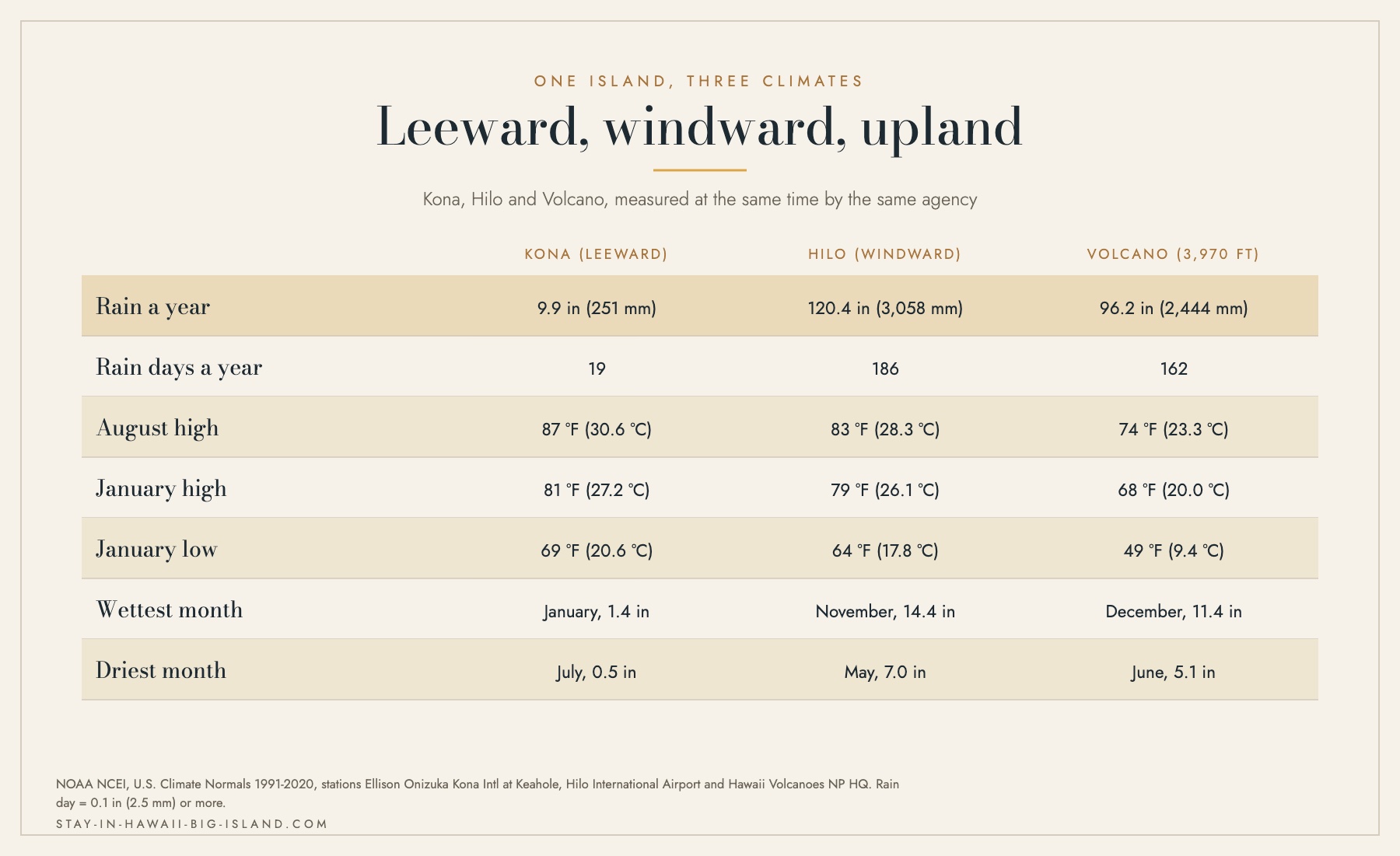
Leeward, windward and upland, measured by the same agency in the same years. Source: NOAA NCEI 1991-2020 normals.
Understanding the Hawaii Island climate
Hawaii Island is bigger than all the other Hawaiian islands put together and carries more climate zones than any state on the mainland. The reason is simple: the northeast trade winds hit two volcanoes nearly 14,000 feet (4,200 m) high, drop their moisture on the windward side, and arrive on the other side dry. Everything on this page follows from that one fact.
The National Weather Service recognises two Hawaiian seasons rather than four: summer from May to October and winter from October to April, with the heaviest rain in the winter half. Temperature barely moves. On the Kona coast the difference between the warmest month and the coolest is 6 °F (3 °C).
The leeward side: Kona and Kohala
This is where most visitors sleep, and it is genuinely dry. Kona International Airport at Keahole averages 9.9 inches (251 mm) of rain a year over 19 days, less than Los Angeles. July, the driest month, records 0.5 in (12 mm). The catch is local: on the Kona slopes above town, afternoon clouds build almost daily in summer, which is why the coffee grows at 1,000 to 2,000 feet and the beaches stay in the sun.
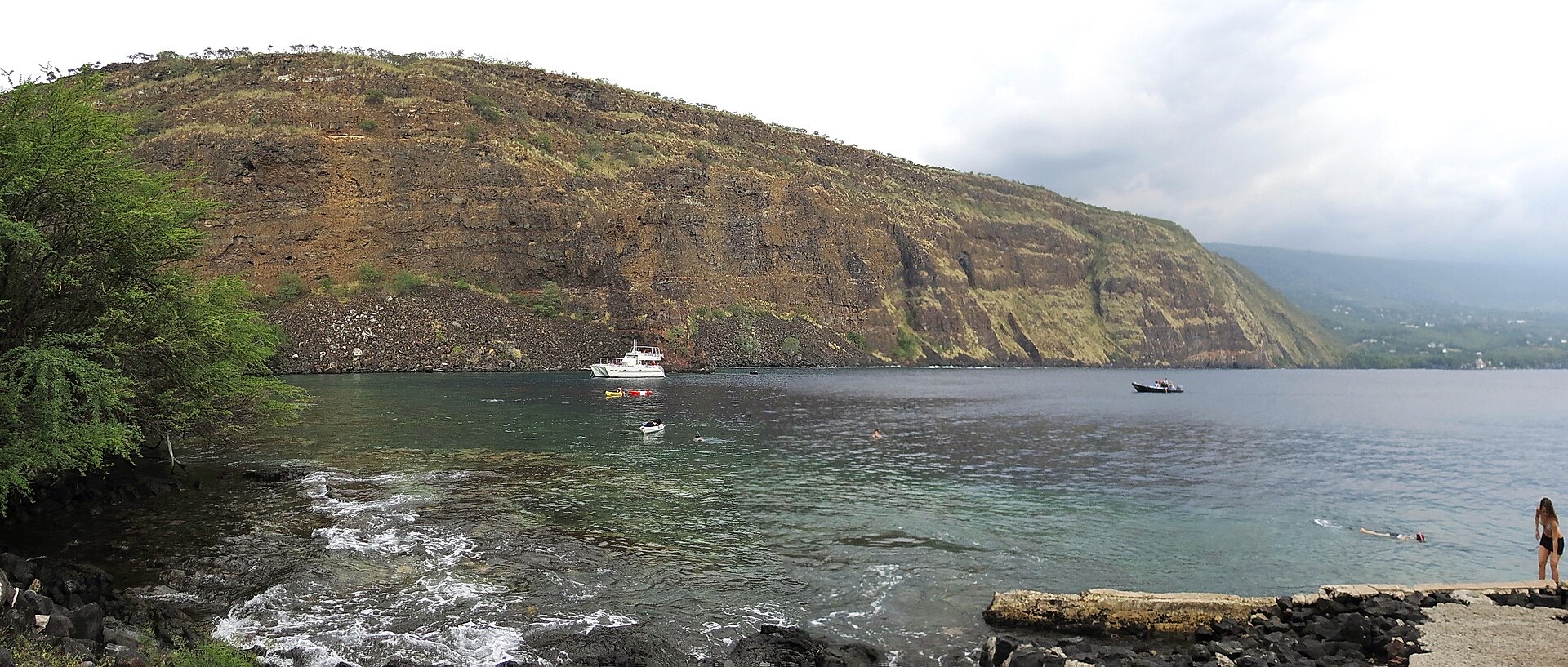
Kealakekua Bay on the leeward Kona coast, the island's best known snorkelling water. Photo : Robert Linsdell, Wikimedia Commons, CC BY 2.0.

The windward side: Hilo and the Hamakua coast
Hilo averages 120.4 inches (3,058 mm) of rain across 186 days a year. November is the wettest month at 14.4 in (366 mm), and even May, the driest, brings 7.0 in (178 mm). That rain is the reason for the waterfalls, the rainforest and the botanical gardens on this coast, and it usually falls at night or in short heavy bursts rather than as continuous grey.
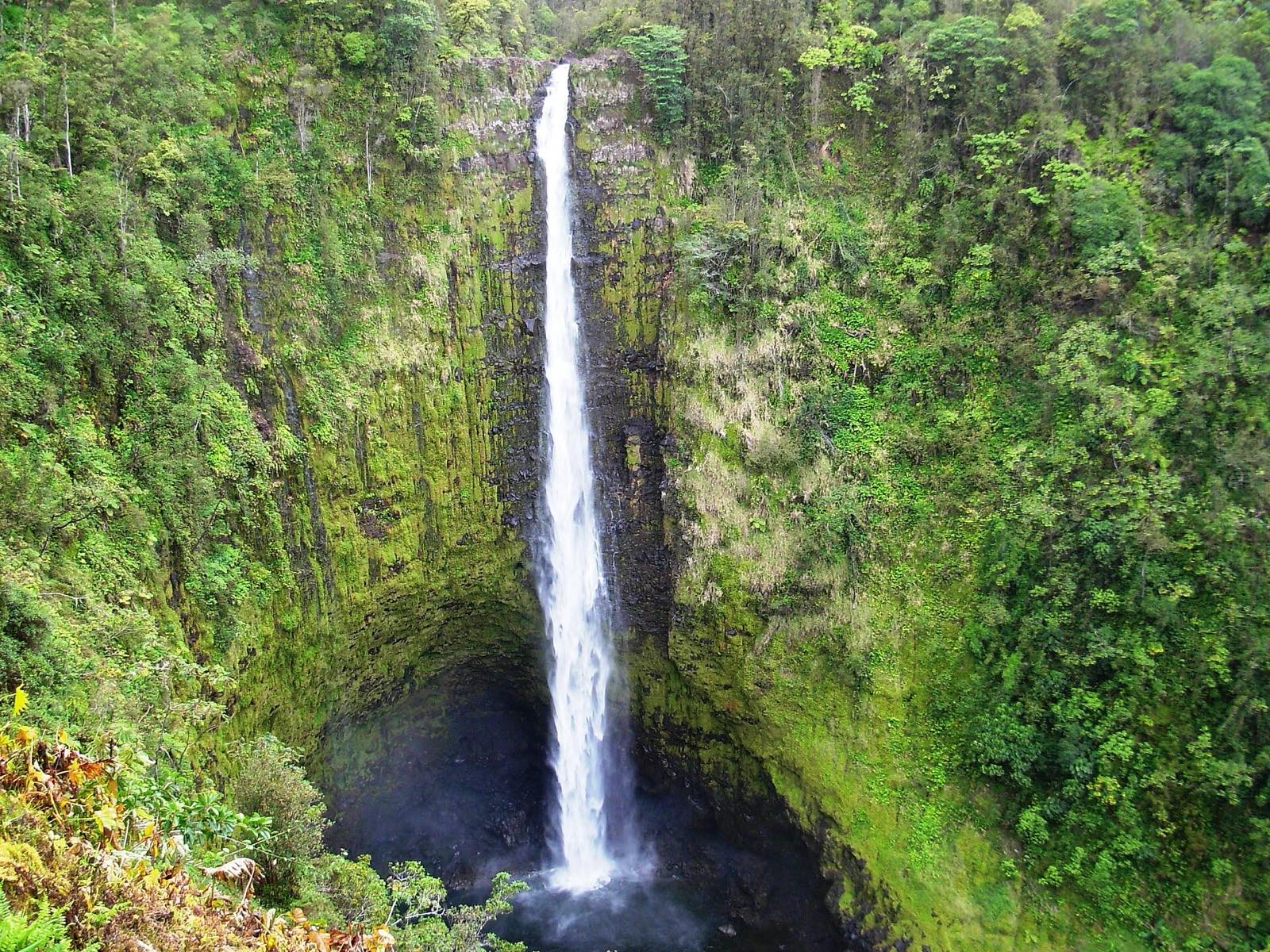
Akaka Falls on the Hamakua coast, the windward side that collects the rain. Photo : brewbooks, Wikimedia Commons, CC BY-SA 2.0.

A practical consequence: a trip that bases in Kona and drives to Hilo and Hawaii Volcanoes National Park crosses two climates in two hours. Take a rain shell whatever the Kona forecast says. Our guide from Kona to Volcano National Park covers the drive.
Altitude: Waimea, Volcano and the summits
Hawaii Volcanoes National Park headquarters sits at 3,970 feet (1,210 m) and averages 68 °F (20.0 °C) in January with lows of 49 °F (9.4 °C), a full 20 °F below the Kona coast. It also collects 96.2 inches (2,444 mm) of rain a year. Higher still, the Mauna Kea summit at 13,803 feet drops below freezing on winter nights and takes snow several times between December and March.
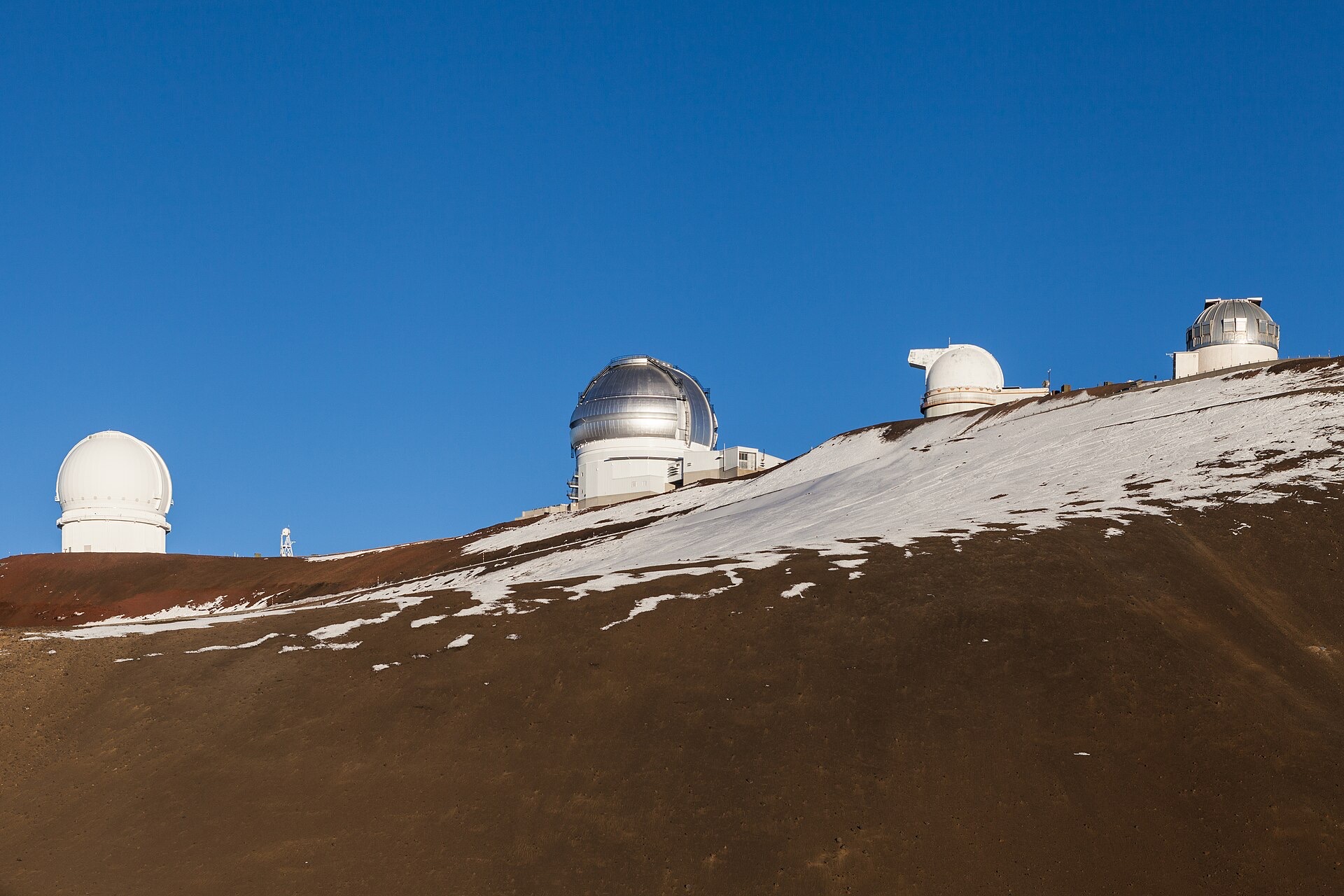
Snow on the Mauna Kea summit in January, at 13,803 feet. Photo : Generic1139, Wikimedia Commons, CC BY 4.0.

Summer on Hawaii Island: May to October
The trade winds are at their steadiest in these months, which keeps the leeward coast clear and the sea flat. Kona highs run 84 °F (28.9 °C) in May to 87 °F (30.6 °C) in August and September, and the sea peaks at 82 °F (27.7 °C) in September. Rain on the Kona side is negligible: under 0.6 in (15 mm) a month from April to September.
A black sand beach on the south coast. Illustration: Stay In Hawaii Big Island. Illustration : Luxury Hotel Booking in Hawaii Big Island.
This is the season for the water. South swells reach the island's southern shores from May to September, while the Kona coast, sheltered from both swell directions, is at its calmest. It is when snorkelling at Kealakekua Bay and the manta night dives off Keauhou are most reliable.
Precautions for a summer stay:
- The sun is tropical and the trade wind hides it. Hawaii's law restricts sunscreens containing oxybenzone and octinoxate, so buy a reef safe product; our guide to the sunscreen law explains what actually qualifies.
- July and December are the two big family months. Rates and car rentals follow.
- Vog, the volcanic haze from Kilauea, drifts southwest on the trades and can settle over the Kona coast for days.
- Late August brings the tail of the central Pacific hurricane season, which runs June 1 to November 30 and rarely produces a direct hit, but can send high surf and rain.
Winter on Hawaii Island: October to April
Winter is warm by any mainland standard and rough only at the edges. Kona still averages 81 to 84 °F (27 to 29 °C) in the afternoon and the sea holds 77 °F (25.1 °C) at its coldest in February and March. What changes is the weather system: trade winds are interrupted by cold fronts and by Kona storms, southerly systems that bring the humid, overcast weather the leeward coast otherwise never sees.
Two Kona low storms crossed the islands in March 2026, on March 10 to 15 and March 19 to 24, closing national and state parks and cancelling flights during spring break, according to the Hawaii Department of Business, Economic Development and Tourism. That is unusual, but it is the winter risk in its clearest form.
What winter gives you in exchange:
- Humpback whales, from shore and from boats, at their peak from January to March.
- Snow on Mauna Kea and Mauna Loa, visible from the Kohala coast on clear days.
- The clearest air of the year after a front, which is when the summit observatories get their best nights.
- Big north and west swells, which close some Kohala beaches to swimming and bring surfers to the north shore breaks.
Whale season: November to May
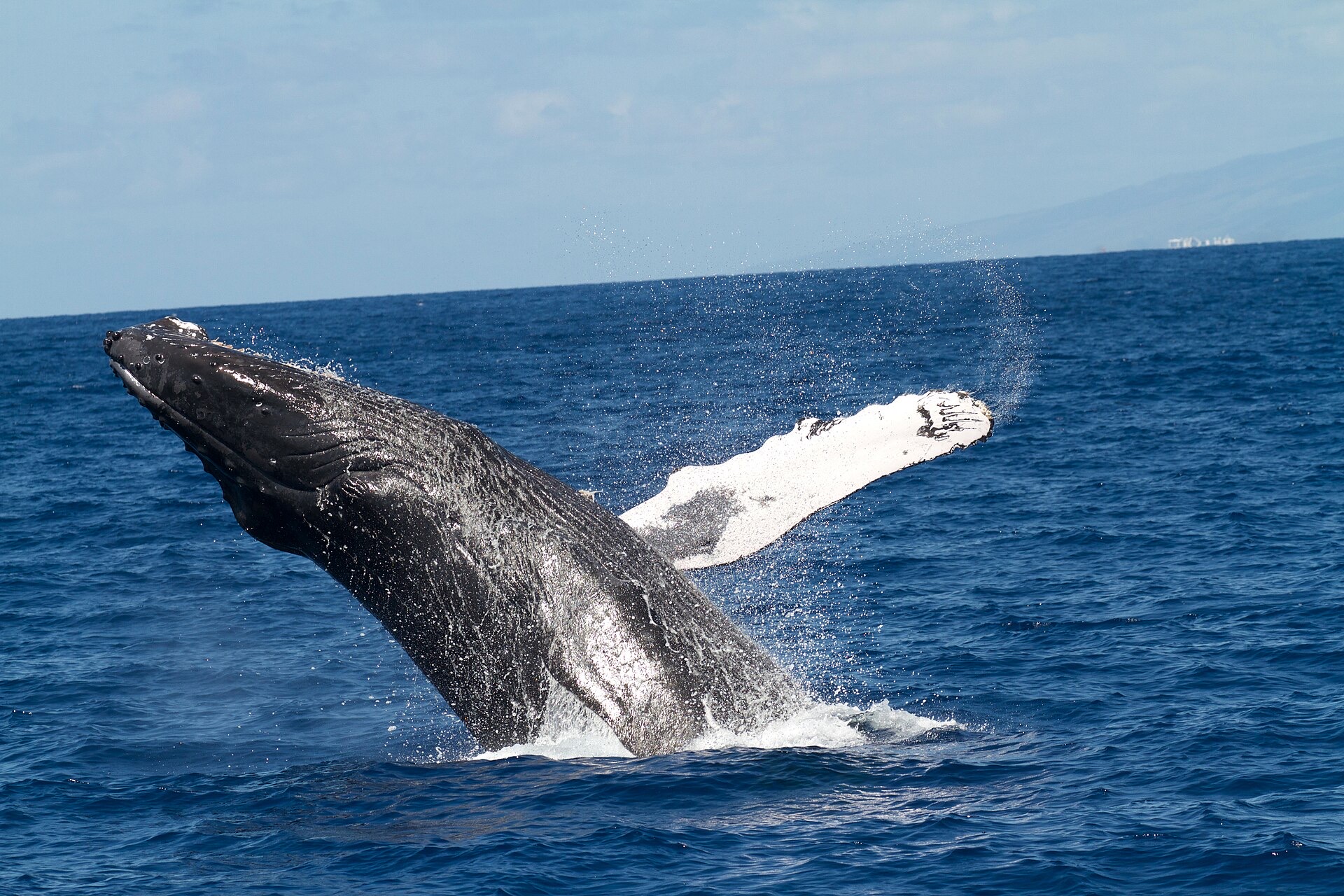
A humpback breaching in the waters of the Hawaiian Islands Humpback Whale National Marine Sanctuary, February. Photo : NOAA Office of National Marine Sanctuaries, Wikimedia Commons, Public domain.

Up to 12,000 humpback whales, more than half the North Pacific population, come to Hawaiian waters between November and May to breed, calve and nurse, according to the Hawaiian Islands Humpback Whale National Marine Sanctuary. They are generally seen from November to April, and the peak is January through March.
Hawaii Island sees fewer whales than the Maui channel, where the shallow water concentrates them, but the Kohala and Kona coasts still deliver from December onward, and you can watch from land. The cliffs above Kealakekua Bay, the Kohala coast resorts and the road above Keauhou all work without a boat. Federal rules require staying 100 yards from a humpback.
The practical window is narrower than the season suggests. December is when the first whales are reliably reported off Kohala, and by late April most have left. If you have one week and whales are the reason for it, book the second half of January or February, and take a morning boat: the wind usually builds after midday and the sea gets choppier through the afternoon.
Swells and the ocean by season
The island has two surf seasons, and they hit opposite coasts. North Pacific storms send swell to the north and west facing shores from October to April, the season that produces the famous winter surf across the state. South Pacific storms send smaller swell to the south shores from May to September, which the National Weather Service puts at a maximum of 10 to 15 feet.
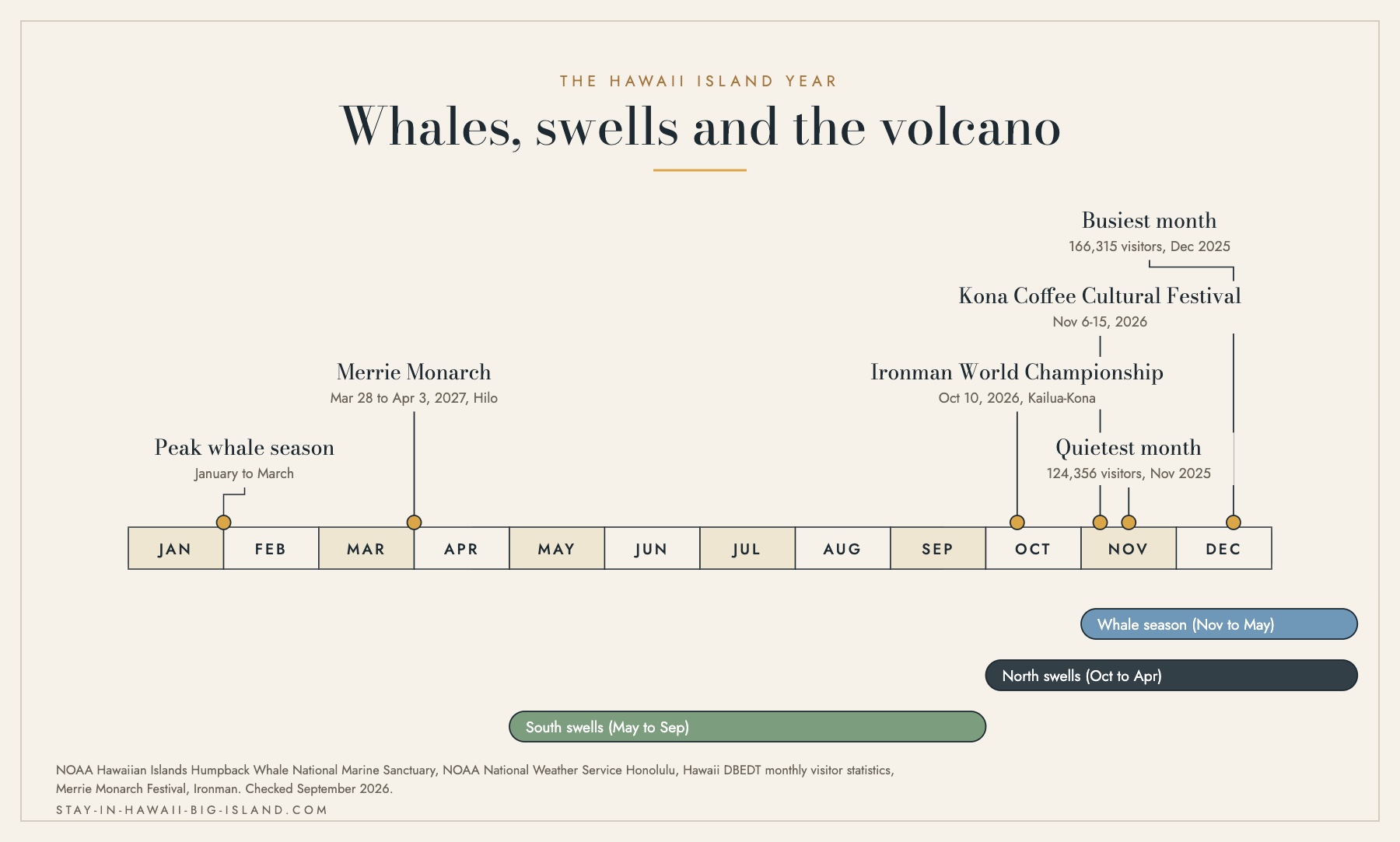
Whales, swells and the island calendar. Sources: NOAA sanctuary, National Weather Service Honolulu, Hawaii DBEDT.
For a visitor this means:
- Snorkelling and diving: the Kona coast is protected from both seasons, which is why it works all year. Summer is the calmest.
- Swimming with children: check the Kohala beaches in winter, when north swell wraps in. Hapuna and Kaunaoa can have dangerous shorebreak.
- Surfing: Honolii near Hilo and the north shore breaks in winter; the south shores in summer.
- Boat trips: more cancellations in winter, when fronts bring wind and swell.
A note on beaches that catches visitors out: this is a young island, and it has far less sand than Maui or Kauai. The good swimming beaches are concentrated on the Kohala coast, at Hapuna, Kaunaoa and Kua Bay, which is exactly the stretch exposed to winter north swell. In January and February, check the county lifeguard flags before you commit to a beach day, and keep Kahaluu or the sheltered bays south of Kailua-Kona as a fallback.
Hawaii Island month by month
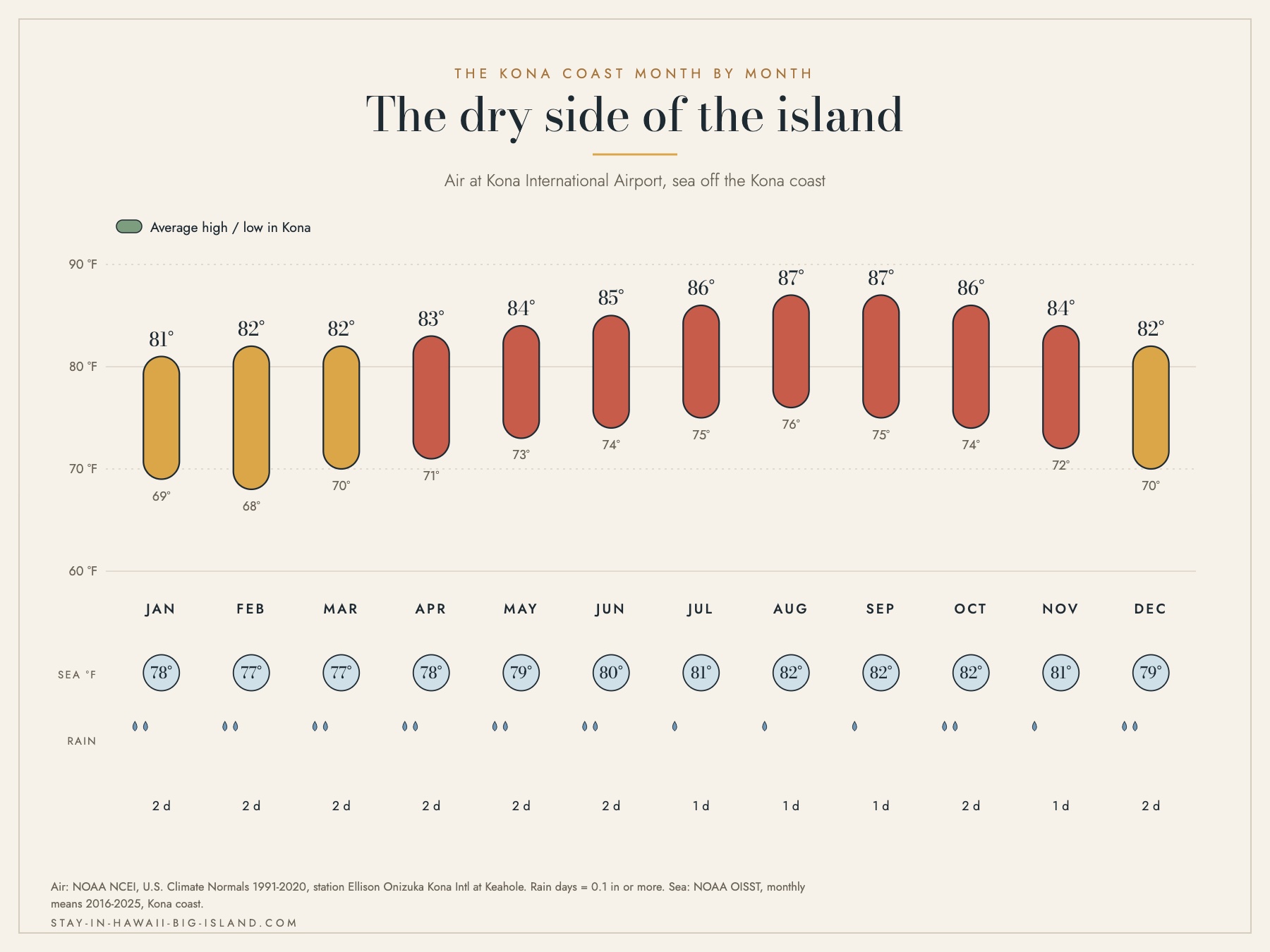
The Kona coast month by month. Sources: NOAA NCEI 1991-2020 normals and NOAA OISST 2016-2025.
| Month | Kona high | Kona low | Sea | Rain, Kona | Rain, Hilo | Verdict |
|---|---|---|---|---|---|---|
| January | 81 °F (27.2 °C) | 69 °F (20.6 °C) | 78 °F (25.5 °C) | 1.4 in (34 mm) | 7.9 in (200 mm) | Whales, busy, mild |
| February | 82 °F (27.8 °C) | 68 °F (20.0 °C) | 77 °F (25.1 °C) | 1.2 in (30 mm) | 10.2 in (260 mm) | Peak whale season |
| March | 82 °F (27.8 °C) | 70 °F (21.1 °C) | 77 °F (25.1 °C) | 1.0 in (25 mm) | 12.7 in (322 mm) | Whales, spring break |
| April | 83 °F (28.3 °C) | 71 °F (21.7 °C) | 78 °F (25.6 °C) | 0.6 in (16 mm) | 9.4 in (239 mm) | Quiet and dry |
| May | 84 °F (28.9 °C) | 73 °F (22.8 °C) | 79 °F (26.1 °C) | 0.6 in (16 mm) | 7.0 in (178 mm) | The best value |
| June | 85 °F (29.4 °C) | 74 °F (23.3 °C) | 80 °F (26.5 °C) | 0.8 in (19 mm) | 7.3 in (185 mm) | Calm sea, school break |
| July | 86 °F (30.0 °C) | 75 °F (23.9 °C) | 81 °F (27.1 °C) | 0.5 in (12 mm) | 9.2 in (235 mm) | Driest, busiest summer |
| August | 87 °F (30.6 °C) | 76 °F (24.4 °C) | 82 °F (27.5 °C) | 0.5 in (14 mm) | 11.3 in (287 mm) | Hottest, storm watch |
| September | 87 °F (30.6 °C) | 75 °F (23.9 °C) | 82 °F (27.7 °C) | 0.5 in (14 mm) | 8.7 in (221 mm) | Warmest sea, empty |
| October | 86 °F (30.0 °C) | 75 °F (23.9 °C) | 82 °F (27.6 °C) | 0.9 in (23 mm) | 10.2 in (260 mm) | Ironman, then quiet |
| November | 84 °F (28.9 °C) | 72 °F (22.2 °C) | 81 °F (27.0 °C) | 0.8 in (21 mm) | 14.4 in (366 mm) | Quietest month |
| December | 82 °F (27.8 °C) | 70 °F (21.1 °C) | 79 °F (26.2 °C) | 1.1 in (27 mm) | 12.1 in (307 mm) | Busiest, whales return |
Sources: air temperature and rainfall, NOAA NCEI U.S. Climate Normals 1991-2020, stations Ellison Onizuka Kona International Airport at Keahole and Hilo International Airport. Sea temperature, NOAA OISST satellite analysis, monthly means 2016-2025, Kona coast. Temperatures rounded to the nearest degree Fahrenheit and converted from that rounded figure.
The best time for what you want to do
On an island where the temperature barely moves, the calendar is set by the ocean, the whales and the crowds rather than by the thermometer.
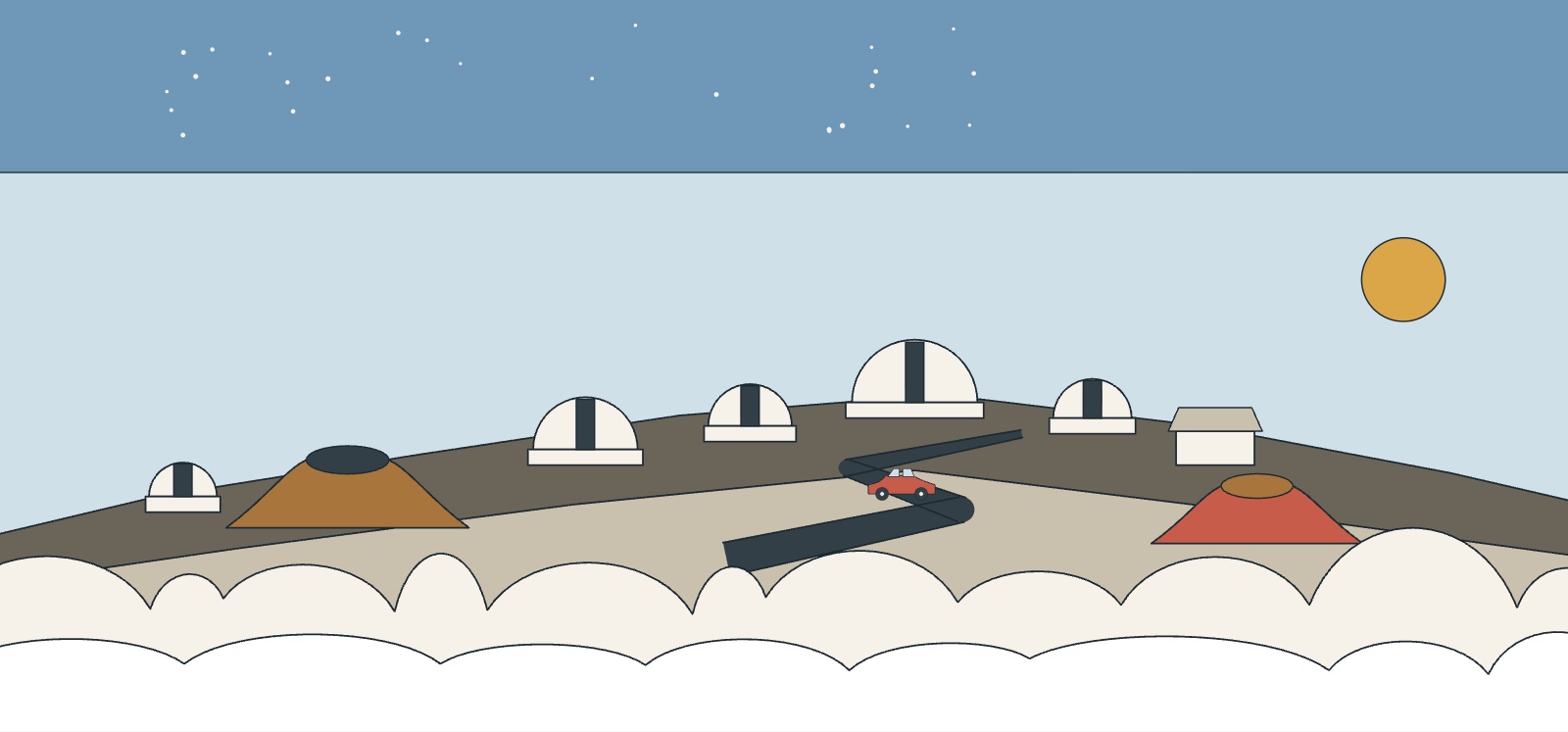
The observatories above the cloud layer on Mauna Kea. Illustration: Stay In Hawaii Big Island. Illustration : Luxury Hotel Booking in Hawaii Big Island.
- Whale watching: January to March, from the Kohala coast or by boat out of Kailua-Kona and Kawaihae.
- Snorkelling and manta rays: May to September for the calmest water off Kona. Our guide to the best snorkelling on the Big Island covers the sites, and Kealakekua Bay has its own page.
- Hawaii Volcanoes National Park: any month. Go early in the day and carry a layer: it is 20 °F cooler than the coast and it rains 162 days a year up there.
- Mauna Kea at sunset: April to October for the highest chance of a clear summit and no snow on the access road.
- Hiking: April to June, before the summer heat and after the winter rain. See our Big Island hikes guide.
- Deep water fishing off Kona: summer, when the seas are flat over the shelf drop, covered in our deep water fishing guide.
- Black sand and turtles: Punaluu on the south coast, any month. Green turtles bask there daily and the water is usually too rough for swimming.
- Families: late April, May and September, the three months that combine warm sea, low crowds and the whole island open. Our Big Island with kids guide has the summer version.
- Value: May and September, the two lowest months for arrivals outside November. Our September booking window article makes the case.
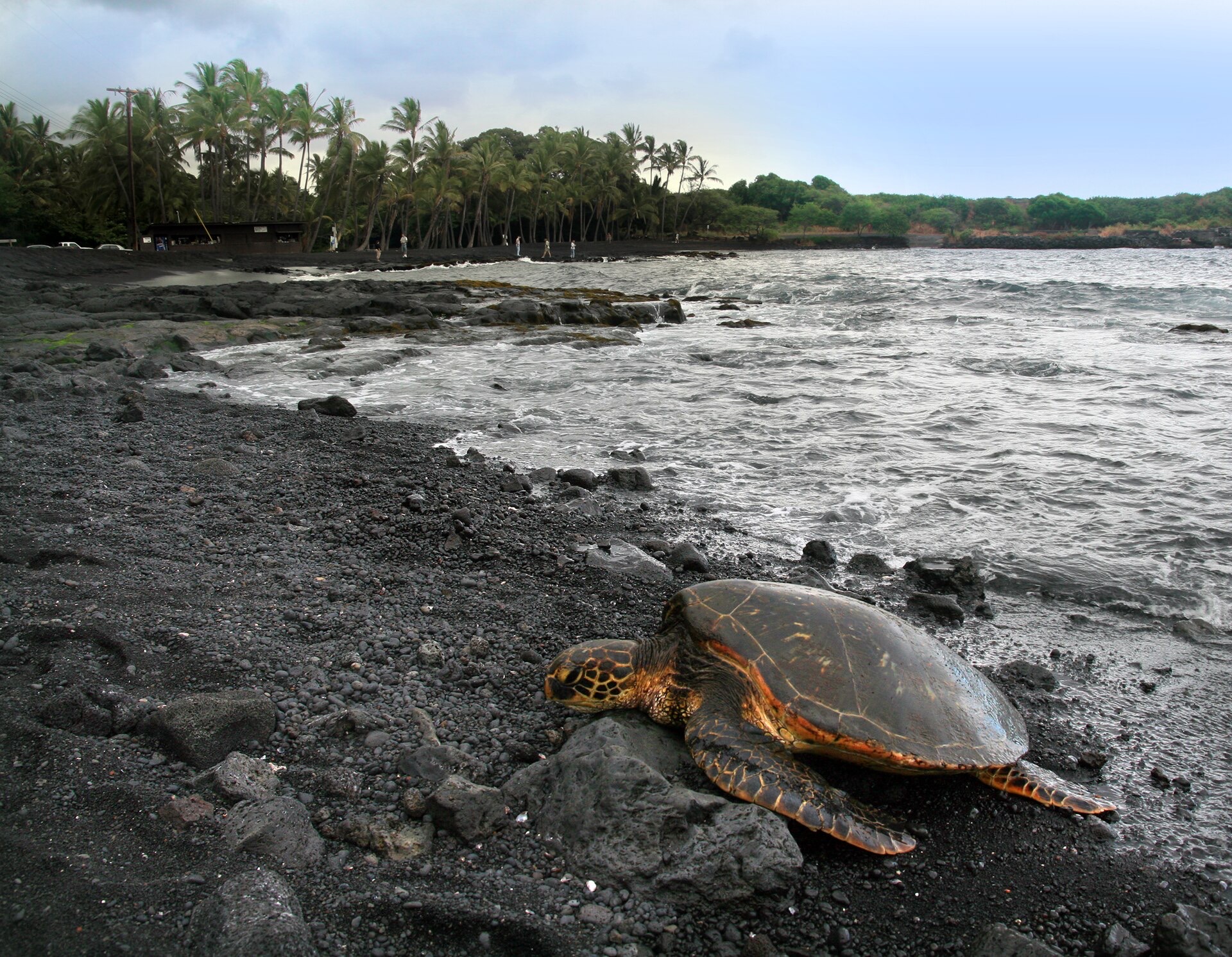
A green turtle basking on the black sand at Punaluu, on the south coast. Photo : Brocken Inaglory, Wikimedia Commons, CC BY-SA 3.0.

The volcano, and what it means for your dates
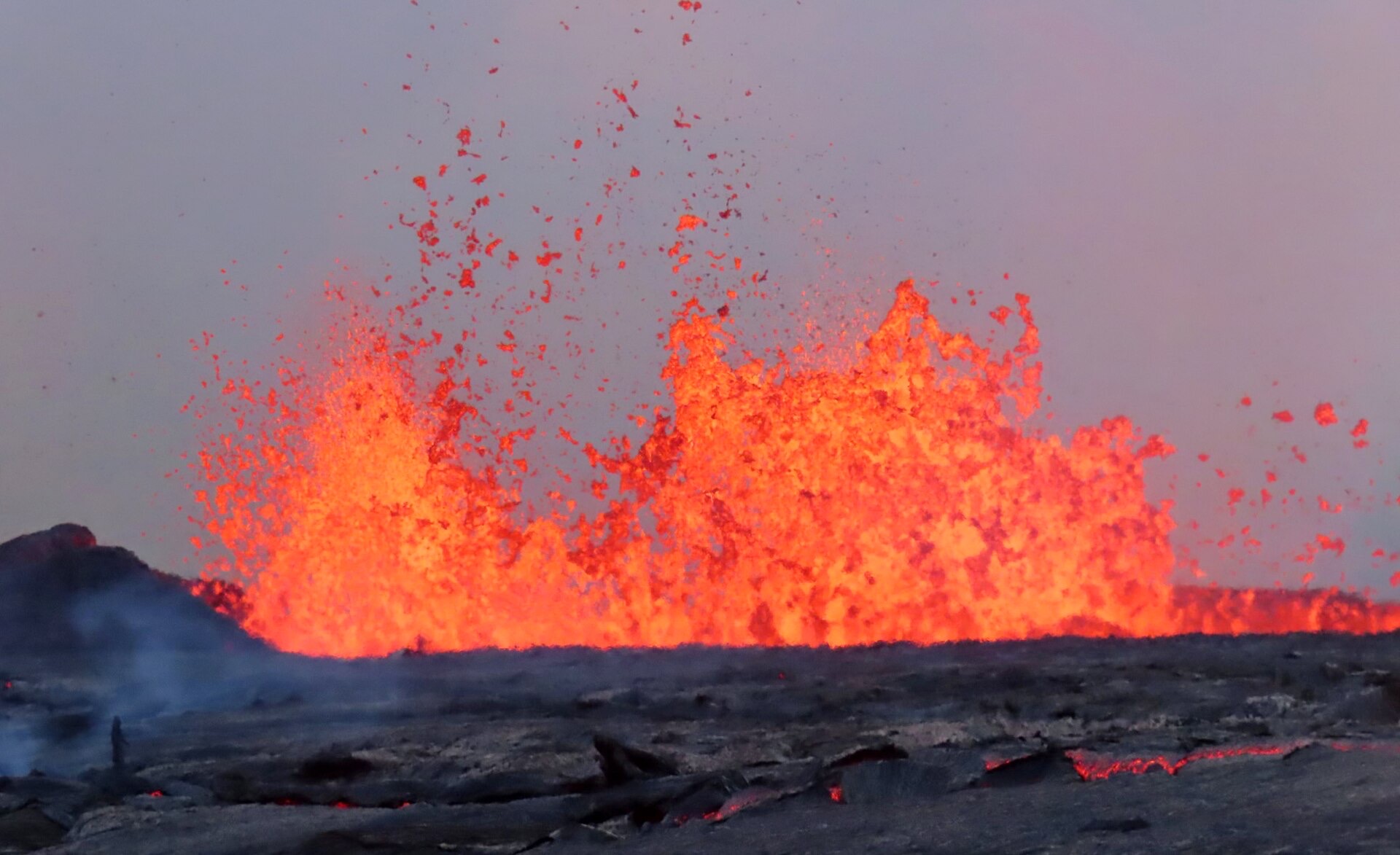
Lava fountaining at the summit of Kilauea, September 2023. Photo : James St. John, Wikimedia Commons, Public domain.

Kilauea has been in an episodic lava fountaining eruption at Halemaumau crater, inside the summit caldera, since December 23, 2024. The United States Geological Survey held the alert level at Orange, Watch in September 2026, with the activity confined to a closed area of Hawaii Volcanoes National Park.
Two things follow. First, no month is better than another for seeing lava: episodes last hours and arrive at no fixed interval, so the honest planning advice is to check the USGS Hawaiian Volcano Observatory before you drive up, not before you book. Second, the park itself is open year round and worth the trip with or without an eruption. Our article on planning a volcano trip between eruptions covers what to do when the crater is quiet.
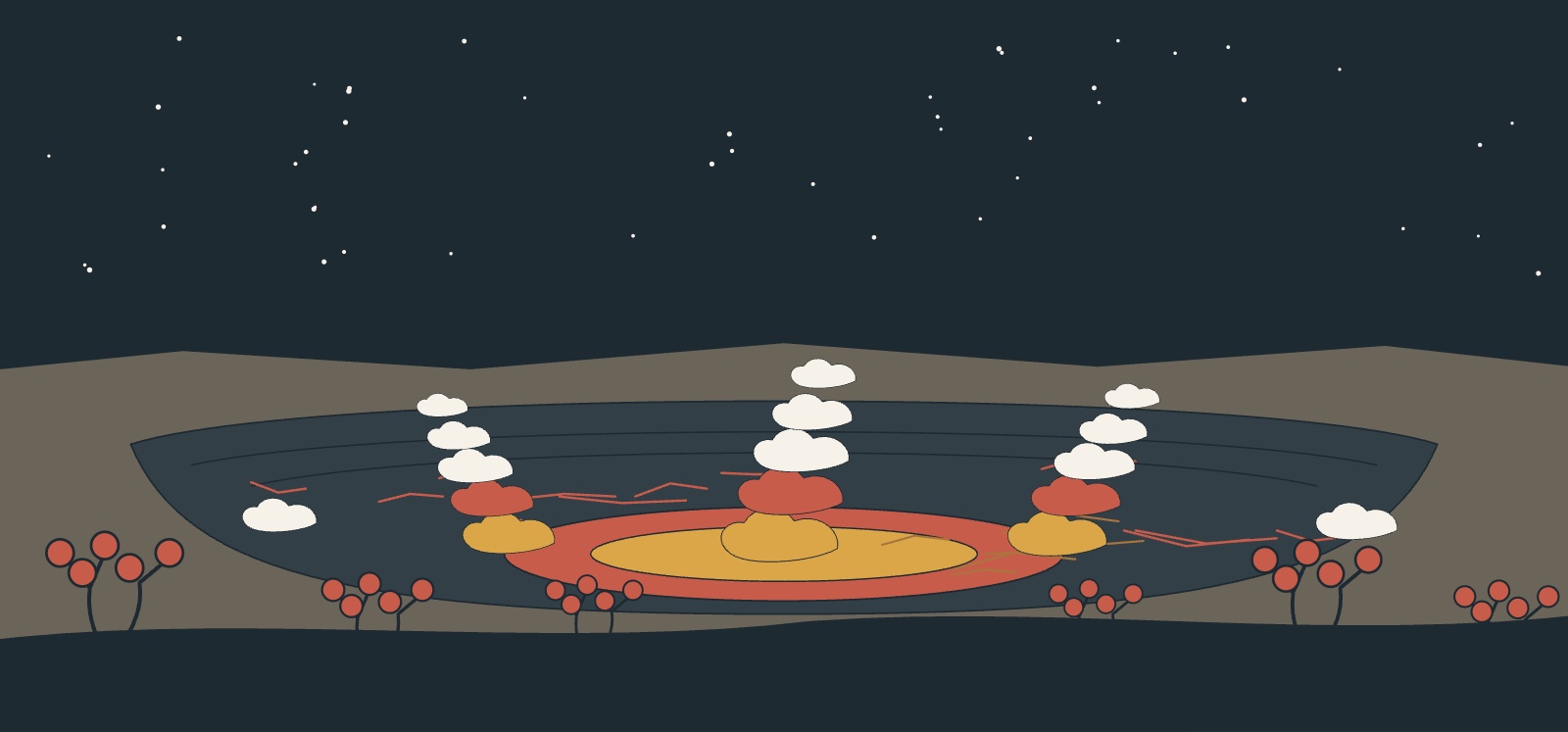
The Kilauea caldera at dusk. Illustration: Stay In Hawaii Big Island. Illustration : Luxury Hotel Booking in Hawaii Big Island.
Events that shape the year
- Merrie Monarch Festival, Hilo: the hula competition that fills east Hawaii for a week after Easter. The 64th edition runs March 28 to April 3, 2027. Hilo rooms sell out months ahead.
- Ironman World Championship, Kailua-Kona: October 10, 2026. Kona closes roads and fills every bed on the coast.
- Kona Coffee Cultural Festival: November 6 to 15, 2026, ten days of farm tours, cupping competitions and a lantern parade through Kailua-Kona.
- Christmas and New Year: the island's busiest fortnight. December 2025 brought 166,315 visitors, the highest month of the year.
- Whale season openings, January: boat operators run from December, and the NOAA sanctuary's Ocean Count brings volunteers to the shore lookouts.
Where to stay
Where you sleep on this island decides what weather you get, more than when you come.
- Waikoloa and the Kohala coast: the driest, sunniest stretch of the island, and the resort heart. Best all year.
- Kailua-Kona: the town base, walking distance to the pier, boats and restaurants.
- Hilo: the wet side, the gateway to waterfalls and the botanical coast, and the base for Merrie Monarch.
- Volcano village: at 3,900 feet next to the national park, cool and rainy, with fireplaces for a reason.
- The Westin Hapuna Beach Resort: on the Kohala coast's largest white sand beach.
- Mauna Lani, Auberge Resorts Collection: on the lava coast at Kalahuipuaa, with its own fishponds and reef.
FAQ
What is the best month to visit the Big Island?
May and September. Both combine a sea at 79 to 82 °F (26 to 28 °C), dry weather on the Kona coast and the lowest visitor numbers outside November. April is the better choice if you want the island before summer crowds, and January to March if whales are the point of the trip.
What is the rainy season on the Big Island?
October to April is the wetter half of the year, but the answer depends on the coast. Hilo, on the windward side, collects 120.4 inches (3,058 mm) a year over 186 days. Kona, on the leeward side, gets 9.9 inches (251 mm) over 19 days. You can be rained on and sunburnt in the same afternoon.
Which side of the Big Island is sunnier, Kona or Hilo?
Kona, by a wide margin. The northeast trade winds drop their moisture on the windward slopes, leaving the leeward Kona and Kohala coasts dry. Kona International Airport records 19 rain days a year against Hilo's 186. Almost every large resort on the island sits on that leeward coast for exactly this reason.
When is whale season on the Big Island?
Humpbacks are in Hawaiian waters from November to May, with the peak from January to March, according to the Hawaiian Islands Humpback Whale National Marine Sanctuary. Up to 12,000 whales make the trip, more than half the North Pacific population. On Hawaii Island they are seen from Kohala and Kona, from boats and from shore.
What is the cheapest time to visit the Big Island?
The quietest months are November, May and September, which is when rates ease. Hawaii Island received 124,356 visitors in November 2025 and 128,617 in September 2025, against 166,315 in December, according to Hawaii's Department of Business, Economic Development and Tourism. Avoid Christmas, spring break and the Ironman weekend in October.
Can you see lava on the Big Island right now?
Kilauea has been in an episodic lava fountaining eruption at Halemaumau crater since December 23, 2024, and the USGS held the alert at Orange, Watch in September 2026. Episodes last hours, not weeks, so check the Hawaiian Volcano Observatory the day you go rather than choosing your dates around it.
Is it warm enough to swim in winter?
Yes. The sea off Kona averages 77 °F (25.1 °C) in February and March, its coldest, and 82 °F (27.7 °C) in September. Air temperatures on the leeward coast stay between 81 and 87 °F (27 to 31 °C) all year. The winter limit is swell, not temperature: north and west facing beaches can be dangerous from October to April.
How many days do you need on the Big Island?
Six to seven days, and more if you can. The island is 4,028 square miles and the drive from Kailua-Kona to Hilo takes about two hours each way, so a volcano day, a whale or snorkel day and a Mauna Kea evening each cost a full day. Many visitors split the stay between the Kona coast and Volcano or Hilo.